
Buying Guide
Twin Over Twin Over Full Bunk Bed: The Complete Buying Guide for Three Kids
Aug
Twin Over Twin Over Full Bunk Bed: The Complete Buying Guide for Three Kids
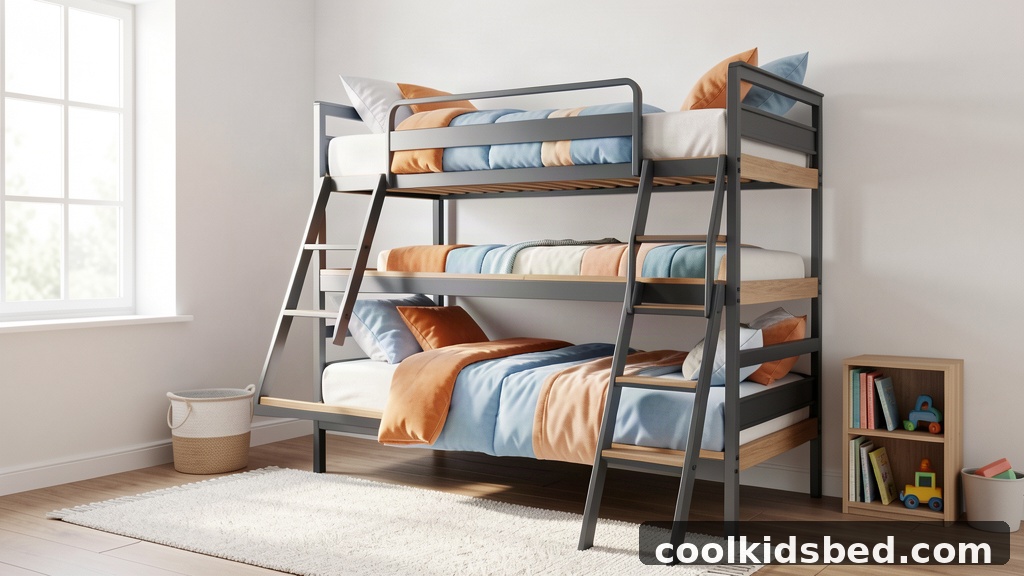
A twin over twin over full bunk bed is a triple-level bunk bed that stacks two twin mattresses on top and a full-size mattress on the bottom, fitting three sleepers in the floor space of one full bed. It is the practical answer for families who need three beds in a shared kids room without giving up floor space for toys, desks, or dressers.
If three kids share one bedroom, you already know the problem. Two beds fit fine, and then the third kid ends up on a mattress on the floor, a trundle nobody can pull out because the dresser is in the way, or a hand-me-down toddler bed that looks wrong next to real furniture. A triple bunk bed solves that. Stacking the beds frees up the middle of the room, and the full mattress on the bottom gives the oldest child room to grow.
The setup is straightforward. Two standard twin mattresses, which measure 38 by 75 inches, sit on the upper levels. The bottom level holds a full-size mattress at 54 by 75 inches, so the whole unit takes up roughly the footprint of that full bed. Most frames are made of steel or solid wood, and the heavy-duty models support 200 to 400 pounds per level depending on the brand and construction. If you are weighing a simpler two-level setup, our twin over full bunk bed guide covers that configuration in detail.
Who Is a Triple Bunk Bed Actually For?
A triple bunk makes sense when three kids share one room and the room is on the small side. Typical shared bedrooms in older houses run 10 by 10 to 10 by 12 feet, and fitting three standard twin beds into that space means losing the closet, the play area, or both. With a triple stack, the footprint stays at about 54 by 75 inches, so the rest of the room stays usable.
The arrangement also works for families who host frequent sleepovers. A twin over twin over full gives you three real beds, not two beds and a camping pad. When guests leave, the top levels are empty but the room still looks tidy.
Triple bunks get less practical when the kids are very young or very heavy. The top bunk is generally not recommended for children under 6, and if your heaviest child is close to the frame’s weight limit, you are shopping for a different configuration, probably a pair of bunks or a bunk plus a daybed. For sibling pairs who still want a third sleeping spot, a twin bunk bed with trundle is a solid alternative.
Why a triple bunk instead of three separate beds? Money, mostly. A decent metal triple bunk runs $400 to $700, and solid wood versions run $800 to $1,300. Three separate twin beds, once you buy three frames, three mattresses, and the extra floor space they need, cost more and eat a whole bedroom. A triple bunk also leaves room for a play area or a desk, which matters more as kids get older.
Safety First: Guardrails, Ladders, and Weight Limits
Safety comes first with any bunk bed, and triple bunks need the same checks as their two-level cousins. The top and middle bunks should have guardrails at least 14 inches above the mattress surface on all open sides. The CPSC requires guardrails on all sides of the top bunk that are not against a wall, and the opening between the rail and the mattress should be small enough that a child cannot slip through. Most frames sold in the United States meet these rules, but it pays to look at the spec sheet.
The ladder should be attached to the frame, not leaning against it, and the top bunk is typically rated for children 6 and up. Weight limits vary by model. Budget metal frames often cap the top level at 150 to 200 pounds, while heavy-duty steel models from brands like Donco or DHP rate their bunks at 250 to 400 pounds. Check the sticker before you buy, and match it to the size of your kids.
A few extra rules matter for a triple stack specifically. Because there are two upper levels, kids climb past the middle bunk to reach the top, so the ladder needs a solid handhold for the whole climb. The middle bunk should get the same guardrail treatment as the top, not just a token rail. And the frame needs to be anchored to the wall in most cases. A tall, heavy frame with three kids climbing on it is exactly the situation where the included anti-tip hardware should actually get used.
Metal Versus Wood: Which Frame Works Better?
Metal frames from DHP and Donco are the value pick. They are lighter, cheaper, and usually quicker to assemble, and the powder-coated steel holds up to years of climbing. A metal triple bunk from DHP typically lands in the $400 to $600 range and comes with a 10-year limited warranty on the frame.
Wood frames from Walker Edison, Max & Lily, and Storkcraft cost more but look like real furniture. A solid wood triple bunk reads as a permanent piece of the room instead of a temporary metal structure, and it tends to hold its resale value better. Storkcraft models are worth a look for younger kids because they carry GREENGUARD Gold certification for low emissions. Max & Lily builds its bunks from solid pine and offers trundle and drawer options on several models.
There is a middle path too. Some brands sell wood-and-metal hybrids, with metal support rails and wood trim. They split the difference on price and style, though they do not always offer the same warranty as a full steel frame.
Features That Make a Triple Bunk Actually Usable
Look for a few features that make a triple bunk actually usable. Storage drawers underneath the full bed turn dead space into a place for clothes or toys. A built-in ladder that is part of the frame, rather than a bolt-on add-on, feels safer and sturdier. Some models convert into three separate beds, which is a real advantage when the kids get older and want their own rooms.
The layout of the ladder matters more than most parents expect. A centered ladder leaves both sides of the lower bunk open, which is better for a younger child who sleeps on the bottom. A side ladder eats into the space on one end but keeps the front of the bed clear for a dresser or toy bin. Stair-style ladders with alternating steps are easier for small feet but take up more room, so they work best in bigger bedrooms. If floor space under the upper bunk is what you are after, our loft bed with stairs guide shows how that layout works.
Ceiling height is the detail people forget. If your ceiling is on the shorter side, measure it before ordering. A triple bunk needs roughly 90 to 100 inches of ceiling clearance, and the top bunk should sit no closer than 30 inches below the ceiling for a comfortable sitting position. In a room with 8-foot ceilings, that works fine. In a basement room with a 7-foot ceiling, a triple stack is probably not the right call.
Assembly: The Part Most Parents Dread
Assembly is the part most parents dread, and triple bunks have more parts than a standard bunk. The metal models typically take two adults about two to three hours with a cordless drill. Wood frames can take longer, especially the ones with drawer kits. Have a second person for the frame lifting steps, and do not skip the included wrench or hex key work, because loose bolts are how bunk beds get wobbly. Tighten everything, then check the tightness again after a month of use.
The order of assembly matters. Most manuals want you to build the two side frames first, then lift the upper bunk onto the lower one, then add the ladder and guardrails last. Do not tighten every bolt fully until the frame is square, or the bed will sit crooked and the mattress will gap at the edges.
Here is the process we recommend for choosing and setting up a triple bunk bed. Measure your room and ceiling height first, then decide between metal and wood based on your budget and the age of your kids. Pick a model with weight limits that fit your heaviest child, and confirm the ladder and guardrail arrangement works for your youngest. Order the bed and a mattress for each level. Assemble the frame with two people, following the manual and tightening every bolt. Anchor the frame to the wall if the manual offers that option, then let the kids climb up for the first time only after every fastener is tight.
If you want a head start on picking a model, one of the best-rated options is the heavy duty metal triple bunk bed with storage drawers, which uses a full-over-twin-over-twin layout and includes convertible frames.
The Bottom Line
Three kids in one room is a lot of life. The right triple bunk bed gives each child a real bed, keeps the floor usable, and does not empty your savings account. Match the weight limits to your kids, pick metal or wood based on your room, and read the manual twice before you start turning bolts. The reward is a bedroom that actually works. Browse our full bunk bed collection to compare more layouts before you decide.
If you are still comparing layouts, a twin over twin over full is the strongest option for three kids who need to share. The two upper twins suit school-age kids, the full bottom bed fits a teen or a parent who stays over, and the whole unit stays inside one compact footprint. Measure, choose your frame material, check the weight ratings, and you will end up with a room that survives the chaos of three kids living in it.