
Buying Guide
Full Over Full Bunk Beds with Trundle: The Complete Buying Guide for 2026
Aug
Full Over Full Bunk Beds with Trundle: The Complete Buying Guide for 2026
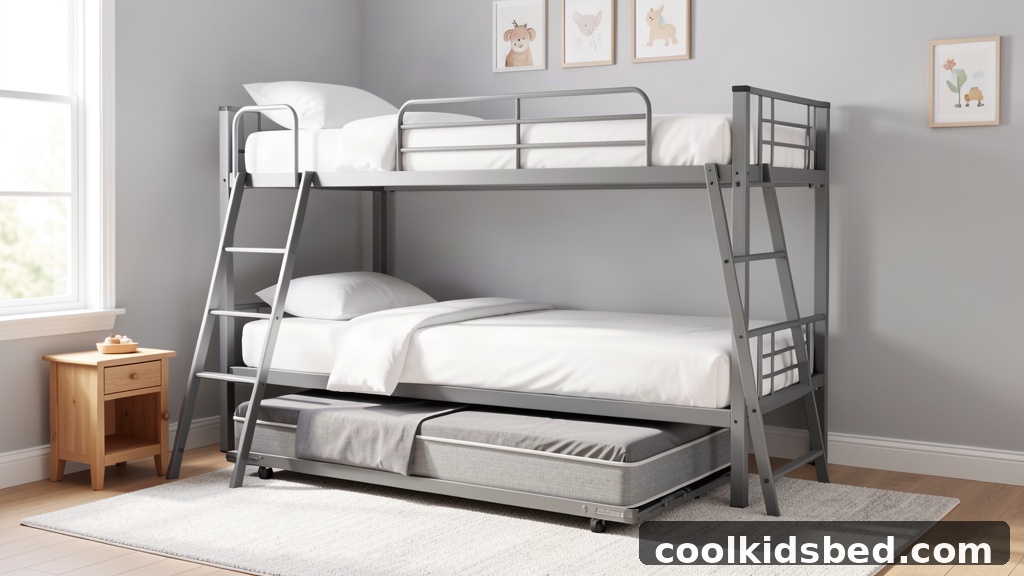
A full over full bunk bed with trundle is a space-saving bed frame that stacks two full-size mattresses (54″ x 75″ each) and slides a third full-size mattress underneath on a rolling platform. It gives two or three kids their own sleeping surface in roughly the footprint of one bed, which makes it a practical choice for shared rooms, guest rooms, and vacation rentals where floor space is tight.
If you have two kids who are outgrowing twin beds, or you host sleepovers every other weekend, a full over full bunk with a trundle deserves a hard look. The lower full bed already fits a teen or an adult guest comfortably, and the trundle turns the setup into three real beds instead of two. That is a lot of sleeping capacity for one wall.
This guide covers the sizes, safety specs, price ranges, and top brands so you can pick the right one without guessing. We also point out the common mistakes parents make with these frames, because a few of them are easy to avoid once you know what to check.
Why Choose a Full Over Full Bunk Bed with Trundle?
The main reason families choose this configuration is capacity. A twin over full bunk gives you one twin and one full mattress. A full over full bunk gives you two full mattresses, and the trundle adds a third. For a room shared by two growing kids, each child gets a bed they can keep using into their teenage years, and a friend can still stay over without anyone sleeping on the floor.
There is also a comfort angle. Full-size mattresses measure 54″ wide by 75″ long, which gives a restless sleeper noticeably more room than a 38″ twin. Teens and adults who crash in the guest room will sleep better, and parents who sit on the lower bunk for story time will not feel wedged into a child’s bed.
Compared to a twin over full bunk bed, the full over full layout costs a bit more but buys a lot more useable space per child. If your kids are still small, the twin over full is cheaper to outfit because twin mattresses cost less. If your kids are already in elementary school or older, skipping straight to full mattresses usually saves money in the long run, because you will not be buying new mattresses when they outgrow the twins.
How the Trundle Changes the Math
A trundle bed is a low platform on wheels that tucks under the lower bunk when it is not in use, and a full-size trundle holds a full mattress, not a thin cot. That is the key difference between a trundle bed and a roll-out mattress. With a full trundle, you have three full-size sleep surfaces in a room that would otherwise fit two beds side by side only if the room were unusually wide.
Trundles come in two styles. The classic version sits on casters and rolls straight out. The pop-up version lifts on a hinge so the trundle mattress sits level with the main lower mattress, which is more comfortable for an adult or older child. Pop-up mechanisms add $100 to $250 to the price, but they are worth it if the trundle gets regular use.
One thing to verify before you buy: confirm the trundle actually fits a standard full mattress. Some frames labeled “full trundle” use a shorter mattress. Measure the trundle deck before ordering a mattress, or buy a frame that explicitly states it takes a standard 54″ x 75″ full mattress.
Full Over Full vs. Twin Over Full vs. Queen Over Queen
The sizing ladder for bunk beds goes twin over twin, twin over full, full over full, and queen over queen. Each step up buys more width and length for the sleepers, and each step also raises the price of the frame and the mattresses.
Full over full sits in the middle of that ladder. It is wider than a twin bunk with a trundle, so it needs a wider room, but it is still narrower than a queen over queen, which runs about 60″ wide per mattress. For most standard bedrooms, full over full is the largest configuration that still leaves floor space for a dresser or a desk.
If you need three bunks stacked for three kids in one room, look at a twin over twin over full bunk bed instead. That layout puts a full bed on the bottom and two twins above, and it handles three kids with a smaller footprint. The tradeoff is that the top two sleepers are still on twins, so they will outgrow the top bunks sooner.
Key Features to Check Before Buying
Not all full over full bunks are built the same. These are the specs that separate a frame that lasts ten years from one that wobbles by year two.
Weight Capacity
Check the published weight limit for each bunk. A sturdy metal or solid wood frame should rate at least 200 lbs per bunk, and many heavy-duty models rate 300 to 400 lbs per bunk. If a listing does not state a weight limit at all, treat that as a red flag. The trundle usually has a lower limit, often 150 to 250 lbs, because it sits on casters and a lighter frame.
Guardrails and Ladder
CPSC guidance for bunk beds calls for guardrails on all sides of the upper bunk that sit at least 5 inches above the top of the mattress, with no gaps larger than 3.5 inches. In practice, good frames ship with full-length rails that run 12 to 16 inches above the mattress. The ladder should be attached to the frame, not leaning against it, and it should have anti-slip steps. A vertical ladder is fine for kids 6 and up; younger kids usually do better with stairs or a low-profile frame.
Mattress Support
The slats under each mattress need to be close together so a mattress does not sag between them. Look for slats spaced 2.5 to 3.5 inches apart, or a solid platform deck. Frames with wide gaps between slats will shorten the life of a foam mattress, and they can make a spring mattress feel lumpy. Some metal frames use a grid of metal slats with foam padding strips, which also keeps the frame quiet.
Noise and Stability
Read the reviews for complaints about squeaking. A frame that uses bolted connections with plastic bushings will squeak less than one with bare metal-to-metal joints. Some brands ship foam pads that sit between the slats and the frame, and those make a real difference at 2 a.m. when a kid rolls over. If the frame has a wobble when you shake it at the store or during assembly, it will only get worse.
Metal vs. Wood Full Over Full Bunks
Both materials are viable, and the right choice depends on your budget and the look of the room.
Metal frames from brands like DHP, Giantex, and Donco are the budget champions. A sturdy metal full over full with trundle typically runs $250 to $500. The best ones use heavy-gauge steel tubing, rated for 300+ lbs per bunk, with a powder-coated finish that resists scratches. Metal bunks are also lighter to move and easier to assemble with a couple of wrenches. The downside is that cheap metal frames can squeak, and the finish can chip if kids climb roughly.
Wood frames from brands like Walker Edison, Storkcraft, and Max & Lily cost more, usually $450 to $900 for a full over full with trundle, but they bring a warmer look that fits farmhouse and classic kids’ room designs. Solid pine and rubberwood frames are heavy and stable, and they handle rough treatment well. Wood bunks are harder to move once assembled, and assembly usually takes longer because there are more parts.
If you want a middle path, look for a steel frame bunk bed with wood-look panels. You get the strength of metal with the appearance of wood, and prices land between the two categories.
Dimensions and Room Requirements
Before you order, measure the room and the ceiling. A full over full bunk with trundle needs about 80 to 82 inches of length and 56 to 60 inches of width for the frame itself, and you want a few extra inches on each side so bedding does not scrape the wall. Plan for roughly 6 to 7 feet of clear floor space.
Ceiling height matters more than people expect. The upper mattress sits around 60 inches off the floor on most frames, and a full mattress adds another 8 to 10 inches. That leaves very little headroom for a seated kid in rooms with 8-foot ceilings. If your ceilings are under 9 feet, consider a low-profile frame or a loft bed layout instead.
Leave clearance in front of the trundle so it can roll out fully. A full-size trundle needs about 75 inches of open floor in front of the bed. If the room is narrow, measure that distance before you commit, because a trundle that cannot pull out is just a mattress storage drawer.
Safety Guidelines for Full Over Full Bunk Beds
Bunk bed safety comes down to a handful of rules, and most injuries happen when those rules are ignored.
- Put kids under 6 on the bottom bunk only. The CPSC recommends against bunk beds for children younger than 6 because they are more likely to fall or get trapped.
- Use the correct mattress size. A full mattress that is too small for the frame leaves a dangerous gap between the mattress and the guardrail. Match the mattress to the frame’s stated size exactly.
- Keep the guardrails on all sides of the upper bunk. Remove them for cleaning, then put them back. Do not let the upper mattress sit above the top of the guardrail.
- Use the ladder or stairs, not the frame. Kids should not climb up the end posts or the trundle to reach the top bunk.
- Tighten the hardware twice a year. Bolts work loose as kids climb, and a loose frame is a wobbling frame.
For a full walkthrough of what to inspect, our bunk bed safety checklist covers each point in more detail.
Top Full Over Full Bunk Beds with Trundle to Consider
One of the best-rated options right now is the Full Over Full Bunk Bed with Trundle on Amazon. It is a heavy-duty metal frame that converts into three separate beds, which makes it useful long after the kids stop sharing a room. The frame ships with full-length guardrails, an anti-slip ladder, and a removable trundle on lockable wheels. At around $270, it lands on the affordable end of the metal category, and reviewers consistently call out how stable it feels.
If the trundle is a nice-to-have rather than a must, a metal bunk bed with trundle in a twin or full configuration gives you the same storage flexibility for less money, and our comparison of the best trundle beds can help you narrow the field.
Assembly Tips
Full over full bunks ship in one or two large boxes, and assembly usually takes two adults 90 minutes to three hours. A few tips make it smoother:
- Assemble in the room where the bed will live. These frames are awkward to carry through doorways once assembled.
- Sort the hardware by size before you start. Most frames use three or four bolt sizes, and mixing them up is the most common assembly mistake.
- Tighten bolts in stages. Finger-tighten everything first, square up the frame, then go back and tighten with the wrench. This prevents racking, where the frame sits twisted.
- Add the ladder and guardrails last, after the frame is square.
- Keep the assembly manual. You will want it when you tighten the frame in six months or move it to a new room.
How Much Should You Expect to Pay?
Budget $250 to $500 for a solid metal full over full bunk with a full trundle. Budget $450 to $900 for a wood version from a reputable brand. Mattresses add $150 to $400 each depending on quality, so the total project cost for three full mattresses plus the frame typically lands between $800 and $2,200.
Watch for frames that look cheap at $150 to $200. In this size, a sub-$200 price usually means thinner tubing, lower weight ratings, and slats spaced too far apart. The frame is the piece of furniture your kids climb on every day, so spend in the middle of the range rather than at the bottom.
Frequently Asked Questions
Is a full over full bunk bed with trundle safe for a 5 year old?
Only the bottom bunk and the trundle are appropriate for a 5 year old. The CPSC advises against putting children under 6 on the upper bunk, and the ladder on a full over full frame is a vertical climb that younger kids should not attempt without supervision.
What size mattress fits a full over full bunk bed trundle?
The top and bottom bunks take standard full mattresses measuring 54″ x 75″. The trundle also takes a full mattress on most frames, but always confirm the trundle deck dimensions in the listing, because some brands ship a shorter trundle that needs a specialty mattress.
Can a full over full bunk bed be separated into two beds?
Some models can. The frame we highlight converts into three separate beds, which is a strong selling point if you plan to reconfigure the room when the kids get older. Check the listing for “converts to separate beds” before buying if that matters to you.
How much weight can a full over full bunk bed hold?
Most quality frames rate each bunk for 200 to 400 lbs. Verify the limit in the spec sheet, and remember the trundle typically has a lower limit of 150 to 250 lbs because it rolls on casters.
Does a full over full bunk bed with trundle need a box spring?
No. Bunk bed frames use slats or a platform deck, so box springs are not needed and usually will not fit. A standard full mattress, whether innerspring, hybrid, or foam, goes directly on the slats.
Final Thoughts
A full over full bunk bed with trundle is the most practical way to fit three full-size sleepers in one room. The configuration works for siblings, for sleepover hosts, and for guest rooms that double as kids’ rooms, and the full-size lower bunk means the bed stays useful as children grow.
Focus your budget on frame quality: heavy-gauge metal or solid wood, a published weight limit of 200 lbs or more per bunk, full-length guardrails, and slats spaced no more than 3.5 inches apart. Spend a little more now and the frame will outlast both kids’ childhoods.