
Buying Guide
The Best Bunk Bed with Ladder for Your Kids: A Complete Buying Guide
Jun
The Best Bunk Bed with Ladder for Your Kids: A Complete Buying Guide
Shopping for a bunk bed means making a bunch of small decisions, but the first big one is usually how kids get up top. Ladder or stairs?
Stairs have gotten popular over the last few years, and I get why. They look grown-up and feel safer. But the classic bunk bed with ladder is still what most American families end up buying. Ladders take up less floor space, they cost less, and they fit into tighter layouts. That matters a lot when you are trying to fit two beds into one room without losing every inch of floor space.
Not all ladders are the same though. Some go straight up. Some are slanted. Some flip out of the way when nobody is climbing. A few even double as little storage drawers. If you are trying to find the right bunk bed with ladder for your kid’s room, here is what I have learned after looking at a lot of these things.
Why Go with a Ladder?
The space thing is the big one. A ladder sticks out maybe a foot from the end of the bed. Stairs need a lot more room, sometimes two or three feet. That extra floor space you save can hold a small desk, a toy bin, or just give kids room to play on the floor. In a small bedroom, those extra inches make a real difference.
Ladders also make the bed easier to move around. If your family rearranges rooms as much as mine does, that matters. You can reposition a ladder-style bunk bed without much trouble. Staircase units are heavier and harder to maneuver through doorways. Bunk beds with ladders tend to be cheaper too. You get two beds stacked up without paying extra for staircase hardware and the extra materials it requires.
Types of Ladders You Actually See
Vertical Ladders
These are the classic straight-up ladders that bolt right onto the end of the frame. They take up almost no extra floor space. The tradeoff is that younger kids find them harder to climb. You need a bit of arm and leg strength to go straight up. For older kids and teens, this is rarely an issue.
Angled Ladders
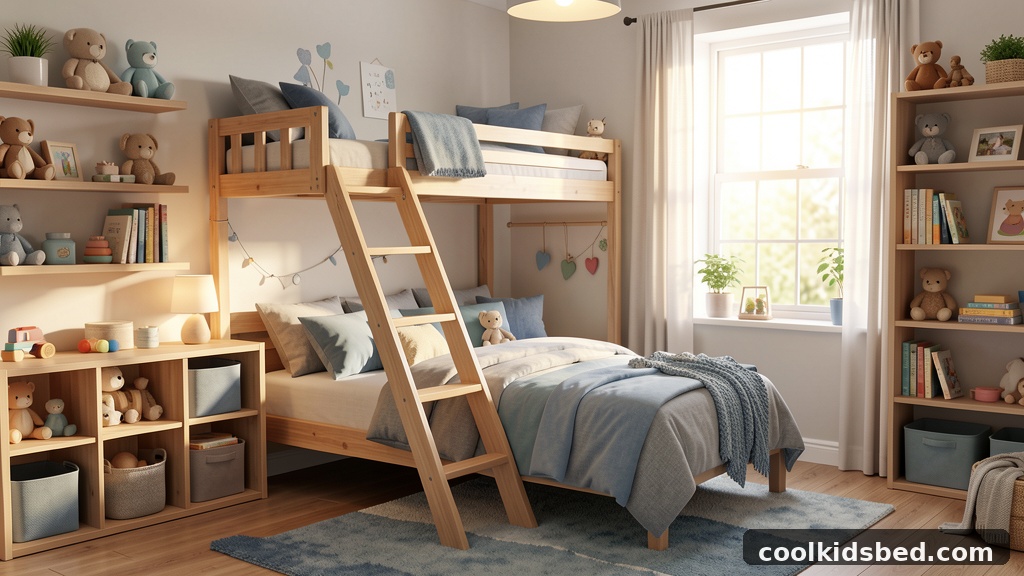
Slanted ladders lean outward at about a 55 to 65 degree angle from the bed. Kids climb them more naturally because each step is positioned right under their feet as they go up. Most parents I have talked to prefer angled ladders. They do stick out a bit further than vertical ones, but the difference is small. For most rooms, that extra few inches is worth it for easier climbing.
Flip-Up Ladders
These hinge at the top rail so you can fold them up during the day. Drop them back down when it is bedtime. They are not super common, but they make a lot of sense in very tight rooms where every square foot counts during playtime.
Storage Ladders
Each step pulls out like a small drawer. Great for socks, books, pajamas, small toys. It is a clever way to add storage without adding furniture. I honestly wish more manufacturers made these.
What to Watch Out For on Safety
Guardrails matter more than anything else on a bunk bed. The CPSC says they need to be at least five inches above the mattress surface. Some higher-end beds run guardrails the full length of the top bunk, which is even better. Do not buy a bunk bed that skimps on guardrails.
The ladder needs to be bolted into the frame, not just hooked on. Wobbly ladder attachment is the most common complaint I see in reviews of cheaper bunk beds. Check this before you buy.
Weight limits vary more than you might expect. Most top bunks are rated for 150 to 200 pounds. If your kid is bigger or you plan to have adults sit on the top bunk occasionally, check the spec. Some budget beds have lower limits.
Step design is something people overlook. Flat, wide steps with a grippy surface are significantly safer for little feet than skinny round rungs. If you have a younger kid, go for wider steps.
Standard rule: kids under six should not sleep on the top bunk. I know some families make exceptions, but the CPSC and most manufacturers recommend waiting until six. The bottom bunk is fine for younger kids as long as guardrails are in place.
If you are looking for other space-saving kids’ bed options, check out our guide on the best twin size sofa bed for kids for rooms where a full bunk bed might not fit.
Wood or Metal?
Wood frames look nicer and feel more solid. They are less likely to develop squeaks over time. Pine keeps the cost down. Hardwoods like oak or maple cost more but can last through multiple kids.
Metal frames are lighter and cheaper. Steel tubing in thicker gauges can be just as strong as wood. The downsides are that metal can get squeaky after a few years, and some people feel they look less warm or cozy in a kid’s room.
Hybrid beds mix both. Metal frame with wooden ladder rungs or a wooden headboard. Those can be a nice compromise if you want the strength of steel with the look of wood.
For families considering different configurations, our guide on the twin over twin bunk bed with slide covers another popular option that adds an element of fun to the bedroom.
Configurations Worth Looking At
Twin Over Twin Bunk Bed with Ladder
Two twin mattresses stacked. The classic setup for two kids sharing a room. An angled ladder version is what most parents I know end up buying. A popular choice is the DHP 2-Tier Twin-Over-Twin Metal Bunk Bed with Ladder, which is one of the best-selling options on Amazon for good reason.
Twin Over Full Bunk Bed with Ladder
Twin mattress on top, full mattress on bottom. This is smart when an older kid sleeps on the bottom or you want the lower bunk to fit a teenager or an adult guest. The bigger bottom mattress is also more comfortable for reading or hanging out.
Loft Bunk Bed with Ladder
The top bunk sits high enough that you can fit a desk, a small couch, or storage bins underneath. Great for older kids and teens who need a study area. Some loft beds come with the ladder built into the side. If you like this concept, also check out the full XL size loft bed with staircase for a grown-up take on the same idea.
Full Over Full Bunk Bed with Ladder
Both bunks are full-size mattresses. Takes up more room but gives both kids full-size sleeping space. Good for older kids or teens who have outgrown twin beds.
What I Would Double Check Before Buying
Measure your ceiling height. You want at least 33 to 36 inches between the top of the mattress and the ceiling. Most rooms with standard eight-foot ceilings work fine, but lower ceilings can be a problem. Do not guess on this. Grab a tape measure.
Think about where the ladder sits in the room. Leave enough open space in front so kids can climb up and down without hitting a wall or dresser. A couple of feet of clearance is usually enough.
Consider how long the bed needs to last. Some bunk beds separate into two standalone twin beds. That is a nice feature if you think the kids might want their own rooms later.
Read reviews about assembly. Some bunk beds come with clear instructions and all the hardware you need. Others are genuinely frustrating to put together. Assembly complaints in reviews are a real signal worth paying attention to.
Common Questions
Can you add a ladder to any bunk bed?
Not usually. The frame needs a specific mounting point. Some brands sell ladders as add-ons, but they have to match the exact model.
How far apart are the rungs?
Standard spacing is 9 to 12 inches between steps. That is the norm for safe climbing.
Are angled ladders actually safer?
A lot of parents find them easier for younger kids because the climbing angle feels more natural. Both types are safe when they are built right and used correctly though.
Can an adult climb up?
Most bunk bed ladders are rated for 100 to 150 pounds. Adults can use them carefully, but do not put your full weight on a single rung.
What age for the top bunk?
Manufacturers and safety agencies say six years old minimum. The bottom bunk is okay for younger kids with guardrails in place.
Bottom Line
A bunk bed with a ladder is a solid, space-saving choice for any kid’s bedroom. If you can, go with an angled ladder. Make sure the guardrails are solid and the ladder is bolted on tight. Measure your room before you buy anything. Pick a configuration that fits your kids now and will still work as they grow.
The right bed will last long enough that your kids will have real memories of climbing that ladder every night. That is the whole point, is not it?