
Buying Guide
Top Tips for Picking the Best Space-Saving Bed for Twins
Sep
When I look for a space-saving bed for twins, I always check out Murphy beds and platform beds first. These save floor space and work well for kids who share a room. Here’s a quick look at what’s popular now:
| Type | Why It Works for Twins |
|---|---|
| Murphy Bed | Folds away, frees up space |
| Platform Bed | Modern, sturdy, easy to clean |
I measure the room, think about safety for kids, and look for smart storage. My best tips? Choose space saving kids beds that fit your twins’ style and comfort. Before buying, I use these purchasing tips to make sure the beds suit their needs.
Room Size
Measuring Tips
When I start planning a shared bedroom for twins, I always grab my tape measure first. I measure the length and width of the room, then check the ceiling height. I also look for things like windows, doors, and closets that might get in the way. For twin beds, I learned that each one is about 39 by 74 inches. To fit two twin beds comfortably, I make sure the room is at least 10 by 10 feet. If you have a small room, you might need to get creative with your space-saving bed arrangements.
I always leave at least 24 to 36 inches of space around the beds. This gives my twins enough room to walk and play. I sketch the room on paper, marking where the beds, doors, and windows are. This helps me see if the beds will fit or if I need to try a different layout. These tips help me avoid surprises when arranging twin beds in a small room.
Layout for Twins
Arranging twin beds in a small room can feel tricky, but I have found some great solutions. For narrow rooms, I like to put the beds side by side with a slim nightstand or shelf between them. Sometimes, I use an L-shape in a corner. This works well for small room corner twin beds and opens up the middle of the room for play.
If I need even more space, I go for twin bunk beds. Bunk beds stack the beds and leave more floor space for storage or play. I also love using twin bunk beds with built-in drawers. Murphy beds are another smart choice for space-saving bed arrangements. They fold up when not in use, which is perfect for a small room.
For long, narrow rooms, I sometimes place the beds foot-to-foot. This lets me put a dresser or storage bench between them. I use under-bed bins, wall shelves, and even storage ottomans to keep things tidy. Small room corner twin beds and twin beds in room corners help me use every inch. With these ideas, arranging twin beds for twins in a small room becomes much easier.
Space Saving Kids Beds
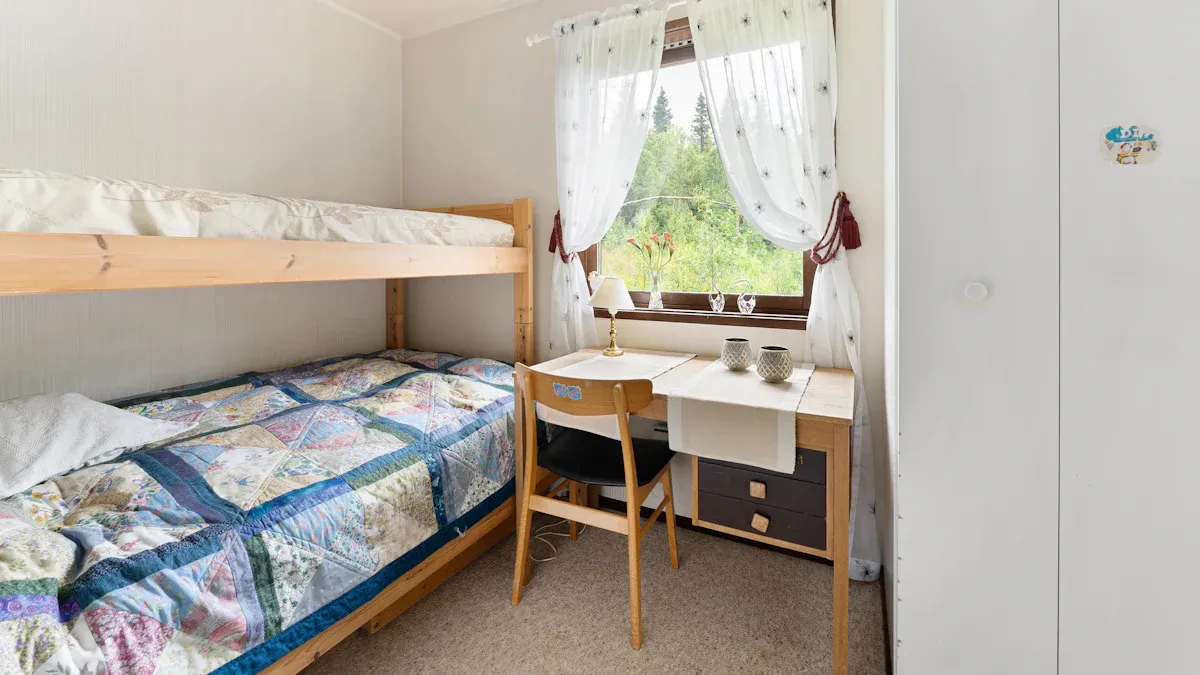
When I look for space saving kids beds for twins, I always start by thinking about how much floor space I have. I want my twins to have room to play, study, and relax. I’ve tried several space-saving ideas over the years, and each type of bed has its own strengths and weaknesses. Let me break down the main options I’ve considered for small rooms.
Twin Bunk Beds
Twin bunk beds are my go-to space-saving solution when I need to fit two twin beds in a small room. I love how bunk beds stack one bed on top of the other, freeing up valuable floor space. My twins get their own sleeping area, and I can use the space underneath for a play zone or a desk. Kids’ bunk beds come in many styles, but I always look for sturdy frames and safety rails.
Here’s what I’ve noticed about twin bunk beds:
- They work best for kids ages 6 to 12.
- Bunk beds let my twins sleep independently, without waiting for a trundle to be pulled out.
- I sometimes struggle to make the top bunk, and dust can collect up there.
- Some kids love climbing up, but I watch out for jumping or rough play.
- Twin over twin bunk bed designs are perfect for maximising space in a small room.
- I’ve seen bunk beds with storage built in, which helps keep toys and clothes organized.
| Bed Type | Pros | Cons |
|---|---|---|
| Twin Bunk Beds | Saves floor space, frees up room for play | Top bunk can be tricky for light sleepers |
| Recommended for ages 6-12 | Safety concerns for top bunk | |
| Can be separated later | Needs higher ceilings | |
| Lets twins sleep independently | Hard to make the top bunk |
I always check the ceiling height before buying a twin over twin bunk bed( Allewie Metal Loft Bed Twin Size ). If the room is too low, I look for low-profile bunk beds or consider other space saving kids beds.
Trundle Beds
Trundle beds are another smart option for twins in a small room. I like how a trundle bed slides out from under a twin bed, giving me an extra sleeping spot when needed. During the day, I can tuck the trundle away and open up the floor for play or study.
Here’s what I’ve learned about trundle beds:
- They’re great for sleepovers or guests.
- Trundle beds are easier to access than the top bunk.
- The mattress is usually thinner, so it might feel cramped for older kids or adults.
- I don’t use trundle beds for daily sleeping, since they wear out faster with constant use.
- Trundle beds take up space that could be used for storage, so I weigh the pros and cons.
If my twins want separate beds every night, I stick with twin bunk beds or low twin beds. For occasional guests, trundle beds are a lifesaver.
Murphy Beds
Murphy beds are my favorite space-saving bed for twins when I need to maximise space in a small room. I love how a Murphy bed folds up against the wall, freeing up the entire floor for play or study during the day. Horizontal Murphy beds work especially well in rooms with low ceilings or slanted walls.
Here’s why I recommend Murphy beds:
- They blend in with cabinets and shelves, making the room look neat.
- Murphy beds often include built-in storage, like USB ports, desks, or bookcases.
- I can customize the finish to match my twins’ style.
- The upfront cost is higher, and I sometimes need professional installation.
- Murphy beds are safe and easy to use for kids, especially the horizontal design.
| Feature | Twin Murphy Bed | Traditional Twin Bed |
|---|---|---|
| Space Efficiency | Frees up floor space when folded up; ideal for small apartments and guest rooms | Takes up permanent floor space; less flexible for multipurpose use |
| Functionality | Includes built-in storage (USB ports, desks, cabinets) enhancing room utility | Fixed furnishing; storage less integrated and flexible |
| Aesthetic Appeal | Sleek, customizable finishes to blend with decor | Simpler design, less customizable |
| Cost | Higher upfront cost; may require professional installation | More affordable; simpler assembly |
I always consider Murphy beds for twins when I want a flexible, modern look and need to maximise space in a small room.
Low Twin Beds
Low twin beds are a simple, effective choice for younger kids sharing a small room. I like how these beds sit close to the floor, making it easy for my twins to climb in and out. Low twin beds work well for toddlers and preschoolers, and I can use the space under the bed for storage bins or toys.
Here’s what I’ve found with low twin beds:
- They’re perfect for younger kids who aren’t ready for bunk beds.
- Low twin beds save space and keep the room feeling open.
- As my twins grow, I may need to upgrade to larger beds.
- These beds are easy to move and rearrange, which helps when I want to try new layouts.
If I want a safe, simple option for twins in a small room, low twin beds are hard to beat.
Tip: I always mix and match space saving kids beds to fit my twins’ personalities and the size of the room. Sometimes I use a twin over twin bunk bed with a trundle for guests, or add a bunk bed with storage to keep things tidy. The right space-saving bed can turn a cramped room into a fun, flexible space for twins to sleep, play, and grow.
Key Features
Sturdy Frames
When I shop for a space-saving bed for twins, I always check the frame first. I want something that can handle daily use and lots of jumping. I look for beds made from pine wood or sturdy veneer. These materials last a long time and keep the bed safe for my twins. Here’s a quick table showing some popular models and their materials:
| Bed Model | Material(s) | Why I Like It |
|---|---|---|
| NEIDEN | Pine wood | Tough and reliable |
| TARVA | Pine wood | Affordable and strong |
| UTÅKER | Pine wood | Stackable and durable |
| MALM | Dark brown veneer | Sleek and sturdy |
| HEMNES | White stain wood | Pretty and tough |
I always pick twin bunk beds with solid frames. A strong bunk keeps my twins safe and gives me peace of mind.
Built-In Storage
Storage is a lifesaver in a twins’ room. I love beds with drawers, shelves, or hidden compartments. Interior design experts say built-in storage keeps the room neat and helps each twin stay organized. I use bunk beds with shelves or desks to save space. Wall-mounted shelves and nightstands with drawers also help. Modular bins and closet organizers keep everything tidy. With smart storage, my twins have room for toys, books, and clothes without clutter.
Tip: I always choose bunk beds with built-in storage to maximize every inch of space.
Safety Rails
Safety matters most when I pick twin bunk beds. I look for bunk beds with sturdy rails on the top bunk. Rails keep my twins from rolling off at night. I check that the rails are high enough and attached firmly. For younger kids, I choose low bunk beds with rails on both sides. I never skip this step because safety comes first.
Mattress Fit
Mattress fit makes a big difference in comfort and safety. I always measure the bed and pick a standard twin mattress—38 inches by 75 inches. This size fits most bunk beds and gives my twins enough room to sleep well. A mattress that fits snugly keeps my twins safe and helps them sleep better. I also check the firmness to support their backs. If the mattress is too small or soft, it can cause problems. I want my twins to feel comfortable and safe every night.
Storage Ideas
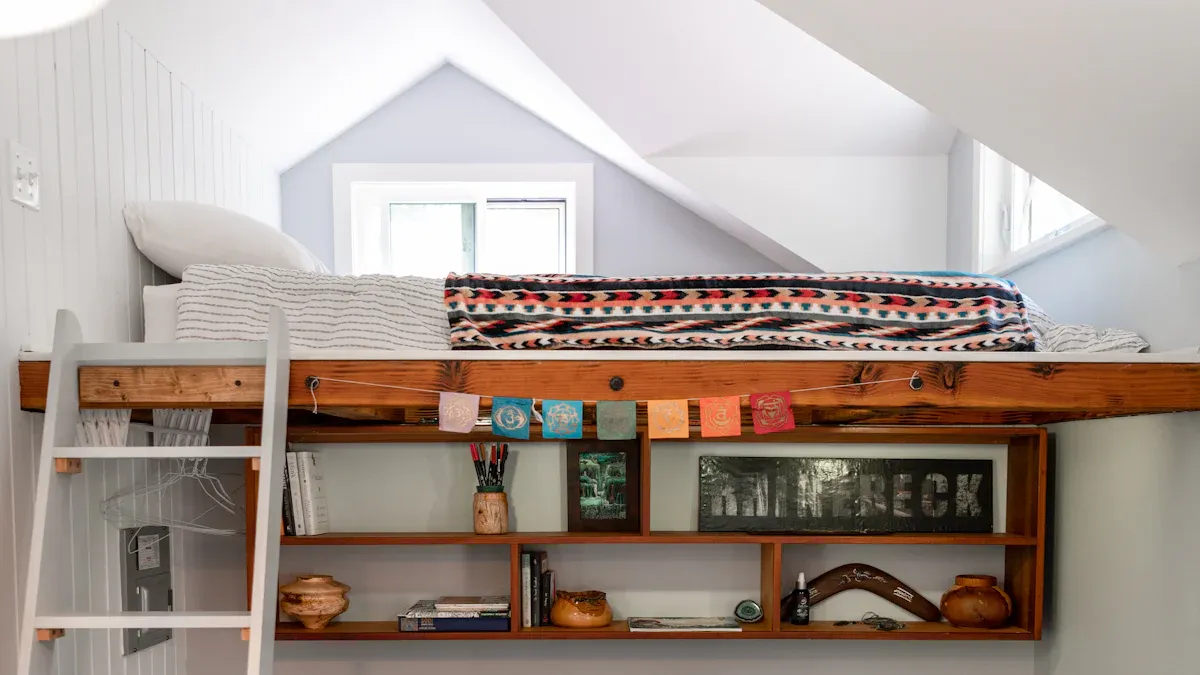
When I set up my twins’ room, I look for smart storage. I want the room to stay neat and use every bit of space. Being creative helps a lot, especially in a small room. Here is how I solve storage problems for my twins.
Under-Bed Drawers
Under-bed drawers help me save space. I like beds with drawers under the mattress. These drawers hold clothes, sheets, or toys. Some twin beds have two to six drawers below. I put extra bedding and out-of-season clothes in them. Bins with wheels and rolling cabinets also work well. I put labels on bins so my twins know what goes where. Sometimes, I use flat vacuum bags for big blankets. These ideas help keep the room clean and tidy.
Tip: Storage beds can take the place of dressers. This gives more space for play or study.
Shelves and Bookcases
Shelves and bookcases are great for storage. I put shelves on the wall above the beds. They hold books, trophies, or small toys. Bookcase headboards have cubbies and drawers for bedtime things. I put a tall bookcase between the beds. Each twin gets a spot for their own stuff. The bookcase also works as a divider. Baskets on shelves keep things neat. I always attach bookcases to the wall for safety.
Multi-Use Furniture
Multi-use furniture helps a lot in a twins’ room. Loft beds lift the bed up and make space below. Under the bed, I put desks or a place to relax. Ottomans with hidden storage are good for sitting and storing things. I pick tall dressers instead of wide ones to save space. Wall hooks and shelves help use all the wall space. These storage ideas make the room open, neat, and fun for my twins.
I always use creative storage and practical furniture to make the room work for everyone.
Style Tips
Color Choices
When I decorate a room for twins, I always start with color. Light colors make a room feel bigger and brighter. I like to use whitewashed or crisp white walls and furniture. This keeps the space airy and open. Sometimes, I add pastel or soft beige bedding to make the room feel calm and cozy. If I want a bit more style, I mix in deep blue or gold accents. These colors add warmth without making the room feel crowded. Green touches, like forest-green bedding or botanical prints, bring a peaceful, natural vibe. For a fun twist, I sometimes go with a blue-and-white nautical theme. Mirrors also help by reflecting light and making the room look larger.
Tip: I always use light and neutral colors as my base, then add pops of color with pillows or art.
Bedding and Decor
Coordinated bedding and decor can really change how a room feels. I pick bedding sets that match or complement each other. This makes the room look neat and helps connect different areas. Sometimes, I give each twin their own color scheme, but I keep the overall look unified. I use matching storage bins under the twin beds and built-in shelves to keep things tidy. Loft beds with desks underneath are one of my favorite twin bedroom ideas because they save space and make the room feel less crowded. Layering colors and patterns helps balance each twin’s style while keeping the room peaceful.
Personal Touches
Personalizing a twins’ room is important, but I try not to overcrowd the space. I arrange the twin beds along two walls or in an L-shape to save space. Curtains around each bed give privacy and help each twin feel special. Sometimes, I paint different sections of the room in colors that match each child’s personality. I use built-in storage, like drawers under the beds, to keep things organized. Mirrors and sheer curtains let in more light and make the room feel bigger. I always remind myself—less is more when decorating twin bedrooms. A few favorite items or photos add personality without making the room feel messy.
Safety and Comfort
Age-Appropriate Beds
When I pick a bed for twins, I always check if it fits their age and needs. I learned that most pediatricians and child safety experts agree on some important rules for bunk beds:
- Kids should be at least 6 years old before sleeping on the top bunk. This helps prevent falls and injuries.
- The bottom bunk or a low bunk works for children as young as 3.
- Guardrails on both sides of the top bunk are a must. They should be at least 5 inches above the mattress.
- I never let my twins jump or play rough on the beds. Only one child goes on the top bunk at a time.
- For younger twins, I use twin beds, trundle beds, or low bunks for extra safety.
I always follow these safety information tips to keep my twins safe and happy in their room.
Non-Toxic Materials
I care about what my twins sleep on every night. I choose beds and mattresses made from non-toxic materials. Health experts say that avoiding chemicals like formaldehyde, pesticides, and fiberglass helps reduce allergies and breathing problems. I look for mattresses with certifications like CertiPUR-US® or GreenGuard Gold. These options use natural materials such as organic wool or plant-based foam. They last longer, feel more comfortable, and help my twins sleep better. I also avoid beds with strong chemical smells or synthetic glues.
| Benefit | Why I Choose It |
|---|---|
| Fewer chemicals | Less risk of allergies and irritation |
| Better air quality | Safer for kids’ lungs and immune systems |
| Eco-friendly | Good for the planet and my family |
| Durable | Lasts longer and saves money |
Assembly and Maintenance
I always read the instructions before putting together a bunk bed. Proper assembly keeps the bed sturdy and safe. I make sure all bolts and screws are tight. I check the guardrails and ladders to see if they are secure. Every few months, I inspect the bed for loose parts or cracks. If I find anything wrong, I fix it right away. This routine helps the bed last longer and keeps my twins safe. Simple maintenance saves me time and gives me peace of mind.
Tip: Regular checks and good assembly are the best ways to keep safety information up to date in a twins’ room.
Ventilation
A healthy sleep space matters as much as the bed itself. I open windows often to let in fresh air. Good ventilation lowers indoor air pollution and keeps the room comfortable. I avoid using strong-smelling cleaners, candles, or air fresheners in my twins’ room. These can make the air worse for kids. I also keep the temperature and humidity just right. Clean air helps my twins sleep better and stay healthy.