
Buying Guide
Upholstered Daybed with Bunny Ears: A Parent’s Buying Guide
Sep
Upholstered Daybed with Bunny Ears: A Parent’s Buying Guide
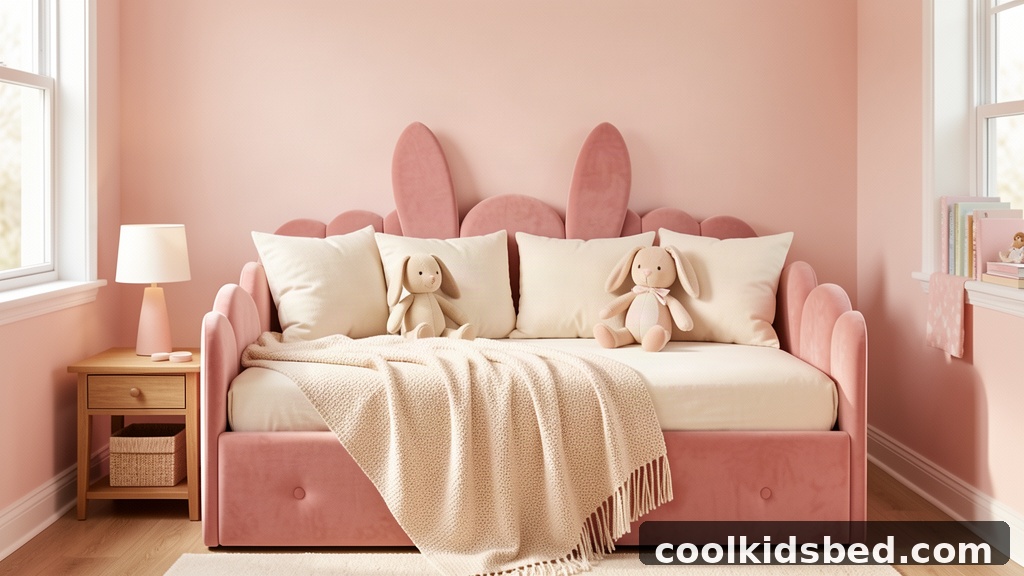
An upholstered daybed with bunny ears is a twin- or full-size platform daybed whose upholstered headboard is shaped with two rounded ear forms, giving the frame a whimsical animal silhouette. It doubles as a sofa during the day and a full sleeping surface at night, making it ideal for small kids’ rooms, guest corners, and shared bedrooms where a traditional bed would eat too much floor space.
Why Bunny-Ear Daybeds Became a 2026 Bedroom Staple
Walk through any toddler room tour posted in the last year and you’ll spot the same shape: a low, plush frame with two soft arcs rising above the backrest. The design works because it solves two problems at once. It gives a small child a friendly, comfort-object silhouette that makes bedtime feel less like a chore, and it keeps the footprint of a twin bed (38″ W × 75″ L) while adding a usable daytime seat.
Retail data backs the shift. Upholstered daybeds under $400 now account for the bulk of kids’ bed searches in the United States, and velvet and boucle finishes have pushed past plain linen in popularity for the first time. Brands that used to reserve animal shapes for toddler furniture — Delta Children, Storkcraft, Harriet Bee — now ship ear-shaped headboards across full-size frames as well, because parents keep buying the twin version and coming back for something bigger.
There’s a practical side too. A daybed sits against one wall and opens into the room rather than extending from it, so a 10′ × 10′ bedroom keeps a clear walking path and enough space left over for a desk or a play rug. That single quality is why daybeds show up so often in our guides to daybeds with storage for tight floor plans.
What to Check Before You Buy a Bunny-Ear Daybed
1. Frame material and upholstery
The ear shapes are the part that fails first on cheap frames. A proper bunny-ear daybed uses a hardwood or engineered-wood inner frame with the ears braced to the main headboard panel, then wraps the whole thing in polyester velvet, linen blend, or boucle. Frames built from solid pine or rubberwood hold their shape for roughly 8-10 years of daily use; particleboard cores with thin foam tend to soften at the ear seams within 18-24 months.
Look for brands with a stated frame warranty. DHP covers metal and wood frames for one year and remains the value pick. Merax and Walker Edison build mid-range frames in the $350-$650 band with thicker cushioning. Storkcraft is the one to shortlist if indoor air quality matters to you — its GREENGUARD Gold certified finishes are tested for low chemical emissions, which is worth the small premium in a nursery-adjacent room.
2. Slat support and mattress fit
Almost every upholstered daybed sold today is a platform design, which means no box spring. The slats do the work, so spacing matters: 2.5″ to 3″ between slats keeps a foam or hybrid mattress from sagging between them, and center support legs are non-negotiable on full-size frames.
Mattress thickness is the mistake parents make most often. A daybed with a low-profile backrest looks and sleeps best with a 6″ to 8″ mattress. Go thicker than 8″ and the mattress will sit above the back cushion, hiding the bunny ears you paid for.
3. Safety specifications to verify in the listing
Check these three numbers before checkout:
- Weight capacity — most upholstered daybeds rate between 250 and 400 lbs. Anything under 250 lbs is a toddler-only frame.
- Headboard height — 20″ to 28″ from the floor gives a child something to lean on without tipping the frame’s center of gravity forward.
- Frame height — low-profile daybeds sit about 12″ to 15″ off the floor, which is the right range for ages 3 to 8. A 12″ rail height on a low frame is a genuine fall-safety advantage for a small sleeper.
If you’re comparing this against a stacked option, our upholstered daybed with slat support guide breaks down the load ratings and center-support details in more depth than a product page will.
Twin or Full? Sizing a Bunny-Ear Daybed to the Room
A twin daybed measures roughly 80″ long × 41″ wide × 30″ high at the ear tips. A full-size version runs 80″ × 58″ × 30″. Both take a standard mattress — 38″ × 75″ for twin, 54″ × 75″ for full — and neither needs a box spring.
Here’s the rule of thumb that actually works in a small room: leave 24″ of clear floor at the foot of the bed for a dresser drawer to open, and 30″ along the open side for walking. In a 10′ × 12′ bedroom, that usually means twin. Move up to full if the sleeper is 10 or older, if two kids share the room on rotation, or if the daybed doubles as the guest bed. A full frame gives a teen or an adult guest a real night’s sleep, which is exactly the trade-off we cover in our full-size daybed guide.
Top Bunny-Ear and Upholstered Daybed Picks for 2026
Best overall match: Twin Upholstered Daybed with Rabbit Ear Headboard, Pink Velvet
The closest thing to the classic bunny-ear silhouette in a mass-market frame. The headboard is shaped with two tall rabbit ears over a scalloped back panel, wrapped in pink velvet, on a twin platform base with slatted support and no box spring required. It runs about $223 and holds up well as a first “real bed” for a 4- to 8-year-old who still wants the room to feel like a nursery.
Best low-profile alternative: GEEVIVO Twin Floor Bed Frame, Bunny
If you want the bunny motif without the full headboard of a daybed, this camel-upholstered floor platform frame pairs the ear shape with Montessori-style guardrails and a side storage pocket, and sits just inches off the floor. It’s a gentler transition out of a crib, and around $240 it costs less than most upholstered daybeds with comparable fabric weight.
Best for storage: upholstered daybeds with built-in drawers
Around $300 to $450 gets you the same upholstered look with two or three drawers tucked under the platform. For a room that has to hold clothes, toys, and a bed, drawers under the daybed replace a dresser entirely — that’s 4 to 6 cubic feet of storage you don’t have to find wall space for. Donco and Max & Lily both ship solid-wood drawer boxes in this range, which slide better over years than particleboard runners.
Daybed vs Bunk Bed vs Loft Bed
Avoid the temptation to buy stacked furniture for a room that doesn’t need it. A bunk bed or loft bed recovers floor space by going up, and it’s the right call when two children share a small room or when you need a desk underneath. A bunny-ear daybed recovers floor space by staying low, which is safer for a child under 6 and far easier to make and change in the morning.
Rough guidance on price and complexity: upholstered twin daybeds land in the $200-$400 band, bunk beds with trundles in the $350-$700 band, and loft beds with desks from $400 to $900. Assembly time tracks the complexity — expect 45 to 90 minutes for a daybed and two to three hours for a bunk with a staircase.
Styling It So It Still Works in Three Years
The bunny-ear frame is a strong shape, so keep everything else quiet. One soft accent color, a washable rug, and a nightstand at bed height is enough. Because the fabric is what dates fastest, choose a neutral base — cream, oatmeal, blush — and let the ears carry the personality. A slipcover-friendly daybed in boucle or velvet will outlast a printed or character-themed one by years, and it’s much easier to clean after a juice spill.
Bedding does most of the visual work. A fitted sheet, a lightweight duvet, and two throw pillows turn the frame into a sofa by day and take under two minutes to reset. Skip the heavy comforter set with twenty pieces; you’ll only ever use five of them.
Assembly, Care, and What Breaks First
Upholstered daybeds arrive flat-packed with the headboard partially assembled. The two failure points to watch are the ear seams and the center support legs. Tighten every bolt by hand first, then finish with a wrench — over-torquing particleboard inserts strips them before the bed is even standing.
For care, vacuum the upholstery monthly with a brush attachment and spot-clean with a mild detergent on a white cloth rather than scrubbing, which pills velvet. Keep the frame out of direct sun; even colorfast velvet shifts over a few summers. With that routine, a $250 to $400 upholstered frame comfortably lasts five to eight years, and most parents hand it down to a younger sibling rather than replacing it.
Questions Parents Ask Most
Does a bunny-ear daybed need a special mattress?
No. Any standard twin or full mattress works, but stay between 6″ and 8″ thick so the ears and back cushion stay visible and the mattress doesn’t ride above the frame.
Is a daybed safe for a 3-year-old?
Yes, if it’s low profile. Look for a seat height around 12″ to 15″, a weight capacity of at least 250 lbs, and no sharp corners on the ear tips. Skip stacked beds entirely at this age.
Can two kids share a bunny-ear daybed?
Not comfortably at twin size. Two children sharing a room are better served by a bunk bed; a daybed plus a trundle gives you a second sleeping surface without the climbing risk, which is the middle path most families land on.
How much should I expect to pay?
Budget upholstered daybeds with molded ear headboards start around $200. The sweet spot for velvet or boucle with real slat support is $220 to $400. Frames with drawers, or full-size upholstered daybeds from premium wood builders, run $450 to $650.
Choosing With Confidence
The bunny-ear daybed is one of the rare pieces of kids’ furniture that’s as practical as it is playful. Measure the wall it will sit against, decide twin versus full based on who’s actually sleeping there, confirm the weight rating and slat spacing in the listing, and put the rest of your budget into the mattress. Browse the rest of our day bed collection if you want to compare silhouettes side by side before you commit, and remember that a low, sturdy frame with good upholstery will follow your child from preschool through elementary school without a single replacement.