
Buying Guide
Twin Size Upholstered Daybed: The Complete Buying Guide for 2026
Oct
Twin Size Upholstered Daybed: The Complete Buying Guide for 2026
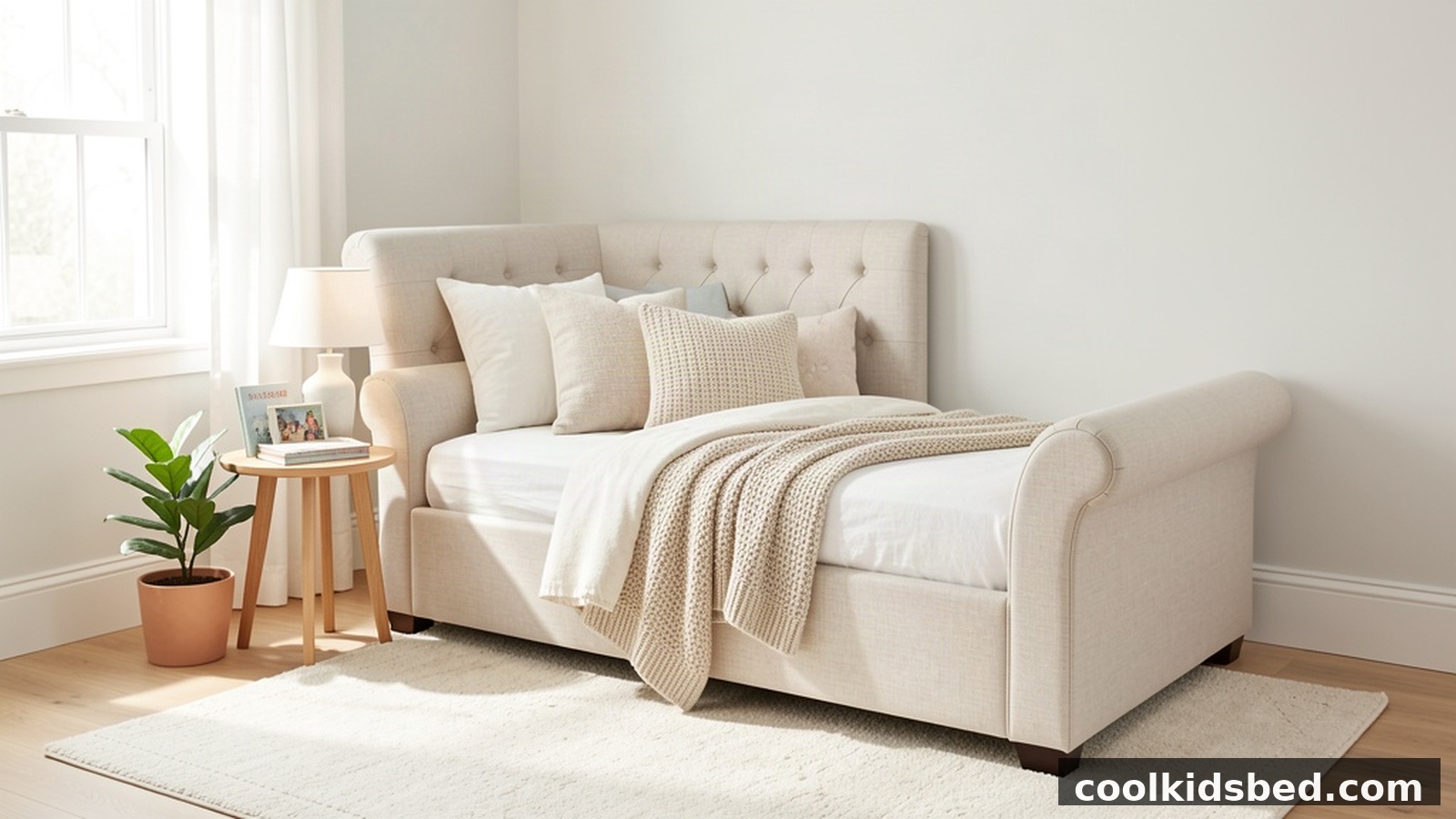
A twin size upholstered daybed is a 38-by-75-inch sleeping platform wrapped in fabric over a wood or metal frame, with a raised back and arms that let it double as a sofa during the day. Most models add a second sleeping spot through a pull-out trundle.
That dual personality is the whole appeal. A daybed reads as seating at 4 p.m. and as a bed at 9 p.m., and it does it inside a footprint that a traditional twin bed with a headboard can’t beat. The catch is that “upholstered daybed” covers everything from a $150 flat-pack frame to a $370 piece with a cloud-shaped backrest, and the differences that matter to a family are rarely the ones in the marketing photos.
Why Twin Size Is the Sweet Spot for Kids’ Rooms
Twin is the standard American kid size for a reason. A twin mattress measures 38 inches wide by 75 inches long, which fits a growing 5-year-old and still fits most 13-year-olds. Compared with a full, a twin daybed shaves about 16 inches of width off the wall — enough to change whether a dresser, a desk, or a clear path to the closet survives the layout.
Twin also keeps the price down. Upholstered daybeds in twin size cluster between $149.99 and $369.99 in 2026, while the same design in full size typically adds $60 to $120. If the room is for one child with occasional sleepover guests, twin plus trundle buys you two sleeping surfaces for less than one upholstered full-size bed and takes up less floor space, since the trundle hides underneath rather than sitting in the middle of the room.
The trade-off is longevity. A twin daybed will serve a child into the teen years, but if you’re furnishing a room that has to handle two kids sleeping in it every single night, a stacked solution usually wins on floor space. Our twin bed and day bed collections both break down by size and frame style if you want to compare shapes side by side.
What a Twin Size Upholstered Daybed Costs in 2026
Prices have held fairly steady, but the gap between cheap and well-built has widened. Here’s what the current market actually looks like:
- $149 – $200: Entry-level frames. Usually metal or thin engineered wood under a polyester cover, one sleeping surface, no trundle. Fine for a guest room used a few nights a year.
- $200 – $290: The sweet spot. Solid wood slats, a real trundle or storage drawers, and a brand name behind the frame. This is where most family purchases land.
- $290 – $370: Premium detailing — button tufting, brass nailhead trim, shaped backrests, corduroy or boucle upholstery, integrated charging ports.
For reference, a well-rated twin daybed with a trundle and a solid hardwood frame currently sells for $255.66, and a comparable twin daybed with two storage drawers comes in at $214.99. A designer-looking cloud-backrest model from VELOCAVA runs $329.99 to $369.99, while Jocisland’s corduroy daybed with storage drawers sits at $239.99. None of those gaps are about size — they’re about frame material, upholstery quality, and how much hardware the manufacturer includes.
Upholstery and Frame: What Actually Holds Up
The fabric gets all the attention and the frame decides everything. A daybed is a piece of furniture that gets sat on, jumped on, and slept on by a child, so the load-bearing parts have to be wood or steel — not particleboard with a foil veneer.
Look for these specifics:
- Solid hardwood or reinforced metal frame. A quality twin daybed should carry a main-bed weight limit around 300 pounds and about 200 pounds on the trundle. If the listing doesn’t state a number, that’s a signal.
- Wood slats, no box spring. Slat support is now standard on good frames, which saves you a $100–$200 box spring purchase and keeps the mattress from sliding.
- Woven, breathable upholstery. Linen, linen-blend, chenille, and corduroy hold up better with kids than thin bonded leather, which cracks at the seams within a couple of years.
- High-density foam in the backrest and arms. Low-density foam is what makes a daybed feel like a bench after six months of daily use.
If you prefer a fabric with more visual texture, a chenille daybed hides spills and everyday wear far better than flat linen. And if wood is more your direction, our guide to the wood twin size daybed covers the solid-wood side of the same decision.
Safety Checks Before You Buy
Daybeds aren’t covered by the same federal standard that governs bunk beds (ASTM F1427), so the safety homework falls on you. Five things to verify on any twin size upholstered daybed:
- Trundle height off the floor. A trundle that sits lower than about 4 inches from the floor is fine; one that pops up to full bed height needs its own rail or it becomes a fall risk.
- Corner and edge construction. Rounded arms beat sharp square corners in a room where kids run.
- Nailhead trim and hardware. Decorative trim should be flush and tight — loose tacks are a choking hazard and a scratch hazard.
- Slat spacing. Gaps wider than about 2.75 inches let a mattress shift and let small limbs slip through.
- Stability under lateral load. Push the assembled frame sideways before you trust it. A daybed that racks side to side when shoved needs the bolts re-torqued or the frame returned.
One more practical point: if you add a trundle for a younger child, keep the pop-up or fold-out surface on the inside of the room rather than against a wall with a window above it.
Twin Size Upholstered Daybed vs. Wood Daybed vs. Bunk Bed
These three solve different problems, and picking the wrong one is the most common expensive mistake in kids’ furniture.
- Upholstered daybed: One sleeping surface by default, two with a trundle. Best for a single child who hosts sleepovers, a small guest room, or a bedroom that also has to function as a reading and homework spot. Softest look, most seating value.
- Wood daybed: Same footprint, harder surfaces, generally cheaper per square inch and easier to wipe down. A better fit for younger kids who are rough on fabric. Styling leans traditional or farmhouse.
- Bunk bed: Stacks two full sleeping surfaces vertically. Wins decisively on floor space when two kids share a room every night, but adds height, requires guardrails, and usually dominates the room’s visual weight.
Families who need storage more than seating should look at a daybed with drawers instead of a plain frame — the under-bed volume is real, and it’s the cheapest storage in the room. If you need both storage and a trundle, expect to pay toward the top of the $290–$370 band. For drawer-equipped designs in wood, a wood twin bed frame with storage is a strong alternative layout. And if a trundle is the priority, our daybed with trundle guide walks through pop-up versus pull-out mechanisms.
Our Top Pick: FAVSH Twin Size Upholstered Daybed with Trundle
For most families, the strongest all-round value right now is the FAVSH twin size upholstered daybed with trundle. It hits the specification list that matters: a solid hardwood frame rated for 300 pounds on the main bed and 200 pounds on the trundle, reinforced wood slats that eliminate the box spring entirely, and a linen-upholstered button-tufted backrest with waved arms and brass nailhead trim. It’s rated 4.4 out of 5 stars across 167 ratings and priced at $255.66 — squarely in the middle of the band where quality stops being a gamble.
The trundle adds a full second twin sleeping surface, which is the entire reason to pick a daybed over a standard twin bed for a sleepover-heavy household. Assembly is straightforward and it arrives in one box. The tufted back and shaped arms give it enough presence to read as a real sofa rather than a mattress on a frame, so it works in a living space or a home office as well as a kid’s bedroom.
Check the current price on Amazon →
Best Budget Alternative
If you’d rather put the money into the mattress, the upholstered twin size daybed with two storage drawers is the better buy at $214.99, rated 4.6 out of 5 stars. It swaps the trundle for two full-width drawers on casters, keeps the wood slat support and leather-air upholstered finish, and needs no box spring. For a room that needs toy storage far more than a second bed, this is the more useful piece of furniture — and it costs about $40 less than the trundle model above.
See the two-drawer daybed on Amazon →
Either way, brand matters less than the frame. DHP and Walker Edison both make competent twin daybeds in this range, and VELOCAVA and Jocisland push further into design territory — the FAVSH frame simply happens to combine the trundle, the weight ratings, and the finish at a price that’s hard to argue with.
How to Measure Your Room Before Ordering
Do this with a tape measure, not a photo. You need four numbers:
- Wall length available. A twin daybed frame runs roughly 79 to 81 inches long. Leave at least 24 inches of walking space at the foot.
- Depth into the room. Count the arms and backrest, not just the mattress. Expect 42 to 44 inches of depth for a tufted model, and add 75 inches of clearance in front if the trundle pulls straight out.
- Ceiling height and window position. Daybacks generally sit under 40 inches, so height is rarely an issue — but check that the arms don’t block a window sill or a baseboard heater.
- Door swing and closet clearance. An upholstered daybed with wide arms can eat the arc of an inward-swinging bedroom door.
If the numbers come out tight, consider an upholstered daybed with slat support in a slimmer profile, or read our notes on making a white daybed with trundle work in a narrow room. If a full-size sleeping surface is non-negotiable, the equivalent upholstered full size daybed breakdown covers that step up.
Assembly, Mattress Fit, and Day-to-Day Care
Budget two adults and roughly 60 to 90 minutes for assembly. The tasks that actually determine whether the bed feels solid six months later are the ones people rush: tightening every bolt with the included wrench rather than finger-tight, and re-checking them once about two weeks after assembly.
On the mattress, buy a standard twin — 38 by 75 inches — and keep the thickness at 8 inches or under. A thicker mattress sits above the backrest and undermines the daybed-as-sofa look, and it can interfere with a trundle sliding shut. Bedding-wise, a twin sheet set and two 18-inch throw pillows will get you the sofa read without spending on custom covers.
For upholstery care, vacuum weekly with a brush attachment, blot spills immediately with a clean cloth rather than rubbing, and rotate any loose cushions monthly so the foam wears evenly. Spot-clean linen and chenille with a mild detergent solution and let them air dry — a machine dryer will shrink the cover and dull the weave.
The Bottom Line on Twin Size Upholstered Daybeds
A twin size upholstered daybed is the most flexible piece of kids’ furniture you can put in a small bedroom: seating by day, a bed by night, and with a trundle or drawers underneath, a second sleep space or a storage unit that doesn’t cost you a single extra inch of floor. Spend the money on the frame and the weight ratings, keep the mattress at 8 inches or less, and confirm the depth measurement against your actual wall before you order.
Get those three things right and the rest is upholstery preference. Get them wrong and you’ll be returning a very large box.