
Buying Guide
Chenille Daybed: The Complete Buying Guide for Kids’ Rooms in 2026
Oct
Chenille Daybed: The Complete Buying Guide for Kids’ Rooms in 2026
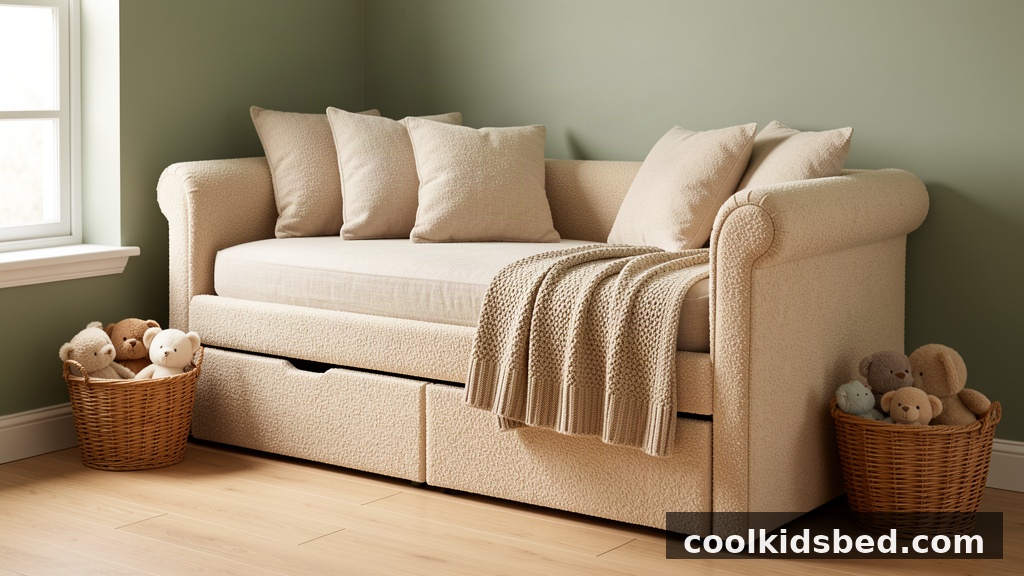
A chenille daybed is an upholstered daybed covered in chenille fabric — a woven textile with a raised pile that hides fingerprints, resists pilling, and feels warm underfoot in winter. It works as a sofa by day and a twin or full bed at night, and most models add a trundle, storage drawers, or both.
Why Parents Keep Choosing Chenille for Kids’ Rooms
The word chenille comes from the French for caterpillar, and the fabric earns the name. Chenille yarn is spun with short fibers trapped in the core, which leaves a fuzzy pile standing off the surface. That pile is why the fabric works so well in a child’s bedroom: it scatters light instead of reflecting it, so juice dribbles and hand smudges read as texture rather than stains.
Polyester performance chenille is the version you will find on most daybeds sold in the United States. It usually rates between 15,000 and 30,000 double rubs on the Wyzenbeek abrasion scale — enough for a bedroom that sees daily use plus the occasional sleepover. Acrylic chenille feels softer to the touch but abrades faster, and true cotton chenille breathes beautifully while pilling more readily. If a listing does not name the fiber, assume polyester and check the rub count in the specifications tab.
One trade-off worth knowing before you buy: chenille holds onto crumbs and pet hair the way a fleece blanket does. A once-a-week pass with an upholstery attachment takes care of it, but if you own a long-haired dog, a tight-weave linen or a smooth microsuede will be easier to live with. Parents who want a plush look usually accept the extra vacuuming. Check our 2026 daybed fabric trends for how chenille compares with gingham, bouclé, and slub-weave options.
Chenille Daybed Sizes: What Fits in a Kid’s Room
Daybeds are built around standard mattress sizes, and the frame adds four to six inches on every side.
- Twin daybed: fits a 38 by 75 inch mattress, so the frame runs roughly 41 to 44 inches wide and 79 to 82 inches long. This is the size to buy for a room under 11 by 11 feet.
- Full daybed: fits a 54 by 75 inch mattress with a frame about 57 to 60 inches wide. Better for a teen, a tall 10-year-old, or a room used for guests.
- Trundle clearance: an extended twin trundle adds about 75 inches of depth. Allow a clear path of at least 30 inches at the foot of the bed, which means the daybed and trundle together want an 8 by 6 foot footprint.
Seat height matters more than most listings admit. A daybed with a 15 to 17 inch seat is comfortable for a six-year-old to climb onto without a step. Above 19 inches, you start seeing kids launch themselves at it, and that is how backrests get loose. Backrest heights run from 30 to 38 inches; the taller end looks more like a sofa but blocks a low window.
If the room is genuinely tight, the storage-forward daybed layouts we rounded up for small apartments show how much floor a daybed gives back compared with a freestanding twin bed plus a couch.
Trundle, Drawers, or Both?
The three configurations cover three different problems.
- Pull-out trundle: a second mattress on casters that slides under the frame. Best for sleepovers. Use a 6 inch trundle mattress so it clears the frame; a standard 8 inch mattress often will not fit. Trundles usually cap at 200 to 250 pounds, so they are for kids, not adults, unless the listing says otherwise.
- Pop-up trundle: lifts to bed height and butts against the daybed, turning a twin into a 76 by 75 inch sleep surface — roughly king width. Costs about $80 to $150 more than a standard trundle and needs a little more floor space to operate.
- Storage drawers: two or three drawers under the seat, typically 20 to 30 inches wide and 12 to 14 inches deep. They hold bedding, board games, or off-season clothes and skip the mattress cost entirely.
A handful of 2026 models do both: drawers on one side, a trundle on the other. That is the most functional setup, and it is also the heaviest, often 110 to 140 pounds shipped. Plan for two adults and about 45 to 90 minutes of assembly. If you already own a trundle frame, our guide to white daybeds with trundles covers the stacking heights and mattress pairings that actually work.
Safety Details That Matter More Than the Fabric
There is no federal safety standard written specifically for daybeds the way there is for bunk beds under ASTM F1427. That means the frame specifications carry the weight, so read them closely.
- Slat spacing: keep gaps at or under 3 inches. Wider gaps let a thin mattress sag and can trap small limbs. Look for 10 to 13 slats on a twin and a center support leg on any full-size frame.
- Weight rating: 250 to 300 pounds for a twin daybed frame, 400 to 500 for a full. Be skeptical of a metal daybed listed at 500 pounds with no center support.
- CPSC tip-over guidance: the Consumer Product Safety Commission has documented hundreds of furniture tip-over injuries a year involving children, most under age 6. Anchor any daybed with a tall backrest to the wall using the included anti-tip strap, or buy one for a few dollars if the box does not have it.
- Foam and wood certification: CertiPUR-US covers the foam, CARB Phase 2 and TSCA Title VI cover the engineered wood. Both are worth checking if the chenille daybed is going into a nursery-adjacent room.
Slat support is the other spec that separates a daybed that lasts eight years from one that creaks in eight months. We go deeper on deck construction and center rails in our guide to upholstered daybeds with slat support.
Chenille Daybeds Worth a Look in 2026
These three are currently selling with chenille upholstery and verified pricing on Amazon. All three are twin or full daybeds with real storage or sleeping capacity, not decorative benches.
1. VINGLI Twin Size Daybed with 2 Storage Drawers and Pockets — about $180. Chenille upholstery with deep diamond button tufting, two pull-out drawers, and side pockets that keep books and remotes off the mattress. At roughly $180 it is the value pick in this list, and the drawer fronts are finished on both sides so they look right when the daybed sits in the middle of a room. Check price on Amazon.
2. DEINPPA Twin Size Chenille Upholstered Daybed with Trundle — about $220. A true trundle daybed in beige or gray chenille, with a rolled backrest and a pull-out second sleeping surface. The trundle takes a 6 inch mattress, and the whole frame ships in one box at about 95 pounds. This is the one to buy if sleepovers are the point. See it on Amazon.
3. DNYN L-Shaped Chenille Daybed with Pull-Out Trundle and USB Ports — about $350. A full-size L-shaped corner daybed that turns a neglected corner into a lounge. The pull-out trundle and the built-in USB ports are the draws here, and the L footprint actually saves floor space compared with a straight daybed plus a desk. View on Amazon.
If you would rather shop a curated set, the daybed collection at coolkidsbed.com carries the same category of frames with chenille, bouclé, and velvet options side by side.
How to Clean Chenille Without Matting the Pile
Chenille is durable but the pile is what makes it look good, so the cleaning routine is about protecting texture rather than scrubbing harder.
- Vacuum weekly with a brushless upholstery attachment. A spinning brush pulls fibers and starts the matting process.
- Blot spills within about 10 minutes. Press with a clean white cloth, working from the outside of the spill inward so you do not spread a ring.
- Use a mild solution of a few drops of dish soap in warm water for anything oily, then blot with plain water to lift residue.
- Brush the pile back up with a soft-bristle brush once the fabric is dry. This is the step that keeps chenille looking new past the two-year mark.
- Never soak the cushion. Water trapped in the batting is what produces the musty smell parents blame on the fabric.
Budget for a lifespan of five to eight years on the upholstery and eight to ten or more on a solid frame. Replacing a $40 to $60 cushion cover is far cheaper than replacing the daybed, so check whether covers are removable before ordering.
What a Chenille Daybed Costs in 2026
Pricing has stayed fairly flat this year. Here is the realistic spread:
- $150 to $250: twin chenille daybed, metal or engineered-wood frame, one drawer or one trundle. This is where VINGLI and DEINPPA sit.
- $250 to $400: full-size or L-shaped frames, better foam density, pop-up trundles, USB ports. DNYN lands here.
- $450 to $700: solid-wood-framed daybeds from established kids’ furniture brands, with replaceable covers and higher weight ratings. Merax, DHP, Donco Kids, Walker Edison, and Storkcraft all compete in this band.
One thing that catches people out: a daybed usually does not include a mattress. A decent twin mattress for a daybed adds $120 to $250, and a 6 inch trundle mattress another $90 to $150. Budget for those from the start rather than discovering it at checkout.
Making It Work in a Small Bedroom
Push the daybed against one wall and a 10 by 10 foot room immediately gains a lounge zone and a wall of open floor for play. Add a 30 inch wide dresser at the foot and the room still feels open. That single change — losing the separate bed and couch — is the reason daybeds keep outselling standard twin beds for kids in apartments and shared rooms.
Two placement rules worth following: leave at least 30 inches between the daybed and any doorway you use daily, and keep the backrest away from a window if you want to open it. A chenille daybed also reads as furniture rather than a bed, which makes it the easiest way to give a kid a sofa, a bed, and a guest spot without buying three pieces. For a softer, more playful silhouette, the upholstered daybed with bunny ears is worth a look.
Questions Parents Ask Before Buying
Does chenille shed? A little for the first week or two, particularly on acrylic blends. Vacuum twice in that window and it settles. Ongoing shedding means a low-quality yarn, not normal behavior.
Can two kids share a chenille daybed with a trundle? Yes, and it is the most common reason people buy one. The daybed takes the primary sleeper and the trundle takes the guest at a 200 to 250 pound limit.
Is chenille safe for a toddler? The fabric is not the issue; the frame height is. Look for a seat at or under 17 inches and anchor the frame to the wall.
Will a chenille daybed fit a full-size mattress? Only if the listing says full. A twin frame will not accept a 54 inch mattress — the 41 to 44 inch width is the hard limit.
The Short Version
A chenille daybed earns its place in a kid’s room because the fabric hides the mess of daily life and the frame does two jobs at once. Match the size to the mattress you already own or plan to buy, choose a trundle if sleepovers happen more than once a month, choose drawers if they do not, and check the slat spacing and weight rating before you check the color. Do that and the daybed will outlast the bedroom’s paint job, which is more than most kids’ furniture can claim.