
Buying Guide
Are IKEA Loft Beds a Good Option for Small Apartments?
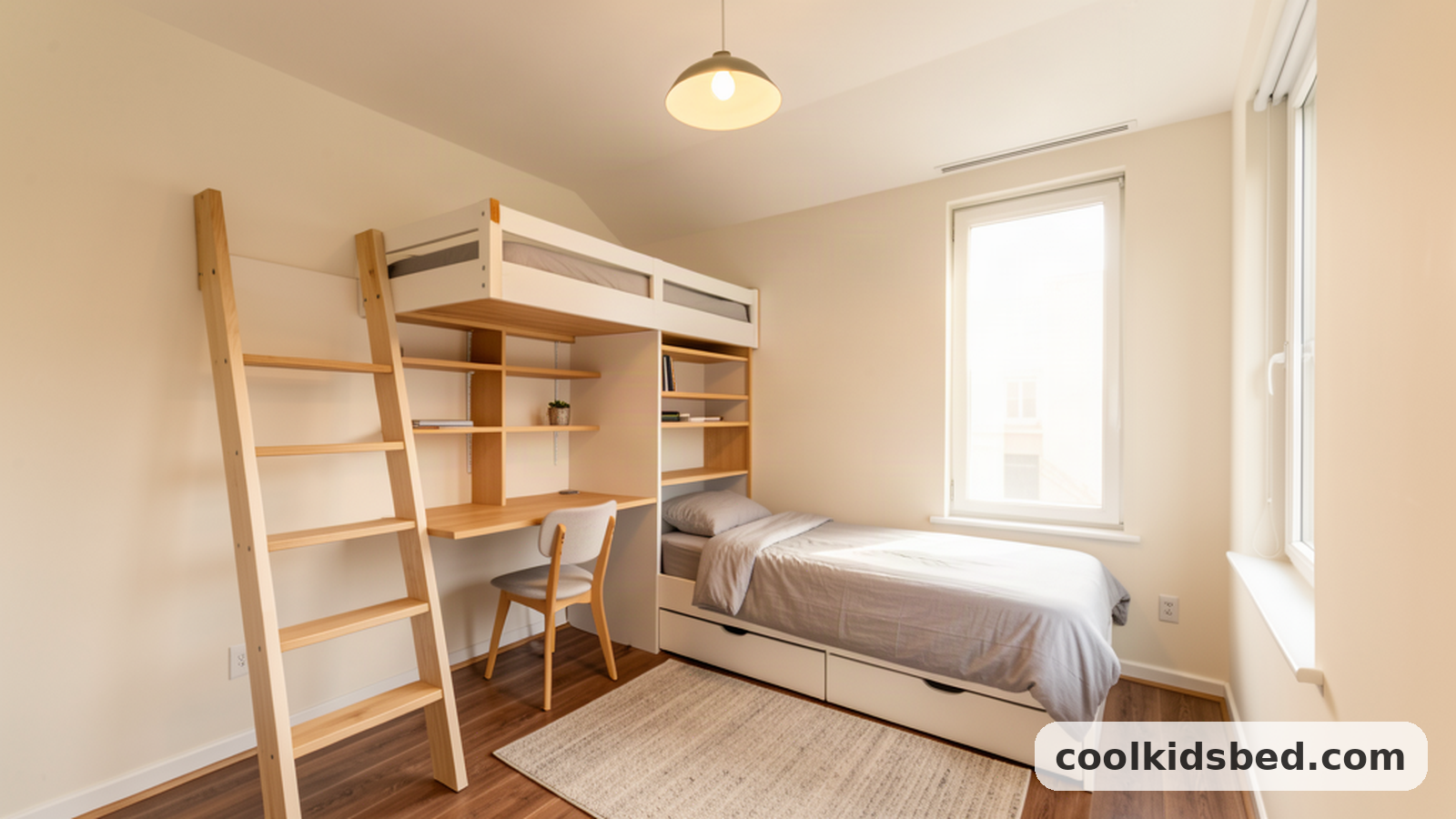
Nov
Are IKEA Loft Beds a Good Option for Small Apartments?
Yes, when two things hold: the ceiling clears IKEA’s 94½-inch minimum for SMÅSTAD once a mattress is on the bed, and the sleeper stays under the 220 lb static load rated on VITVAL or SMÅSTAD. In an apartment with an 8-foot ceiling, VITVAL and SMÅSTAD reclaim real floor.
The rest of this guide is the arithmetic behind that answer. On the US SMÅSTAD listing, IKEA states a 94½-inch minimum ceiling height. The STORÅ listing asks for 106 inches instead. The mattress caps are just as model-specific: 8¼ inches on SMÅSTAD and 5⅛ inches on VITVAL. Measured against a 96-inch ceiling, those figures decide whether the bed is a workspace or a bunk nobody can sit up in. Where the numbers stop working, the frames we sell run higher, and the difference is worth seeing side by side before you order anything flat-packed.
Loft and bunk bed safety: what federal rules actually cover(federal citations checked against the official code · verified 2026-10-18)
US bunk bed rules are written around a raised bed with a mattress platform above another sleeping surface, which is exactly what a bunk frame is. The rows below are the citations to read before assembly; the label on the left is our shorthand, not the legal text.
| Product rule | Citation | Source |
|---|---|---|
| Children’s bunk beds | 16 CFR Part 1513 | official text |
| Bunk beds (not for children) | 16 CFR Part 1213 | official text |
| Lead in paint and coatings | 16 CFR Part 1303 | official text |
| Clothing-storage tip-over | 16 CFR Part 1261 (STURDY Act) | official text |
Check these before the first night
- Bunk beds need guardrails on both sides of the upper bunk, plus a ladder – 16 CFR 1513 (children) and 1213 (other).
- Kids’ furniture finishes fall under the lead-in-paint limit in 16 CFR 1303; ask for the test report, not a slogan.
- A dresser in a kid’s room is a tip-over risk: 16 CFR 1261 (STURDY) is the rule to check, and anchoring is the practical fix.
Reference only, not legal advice. These are manufacturer/seller duties; read the current eCFR text before relying on it.
Why these citations matter for a bunk bed: the 16 CFR 1513 text is the baseline a US seller of children’s bunk beds has to build to – guardrail height, mattress support and the gap rules that stop a child from slipping through. Whether a specific frame is in scope is a question for the seller’s compliance paperwork, not for a product page photo.
The trade nobody prints on the product page
A loft bed does not create space. It moves it: you give up the ceiling above the mattress and take the same area back as floor. In a one-bedroom where the child’s half of the room has to be a bedroom at night and a homework desk after school, that swap is the whole reason to buy one.
The cost is headroom, and headroom above the mattress is the number that decides whether the bed feels like a den or a crawlspace. A frame that is too tall for the room is worse than no loft at all, because nobody can sit up in it and the ceiling fan becomes a hazard you think about every night.
Ceiling first, floor second
Take the ceiling measurement at the wall where the bed will stand, with a tape held vertically at the corner, not in the middle of the room. Sloped ceilings, a ceiling fan’s drop rod, a light fixture and a door swing all eat into the space that looked empty from the doorway. Then subtract the frame height and the mattress. What is left is the space your child sits up in.
Three published minimums, one standard apartment ceiling
IKEA does the arithmetic for you on two of its loft beds. The US SMÅSTAD listing gives a 94½-inch minimum ceiling height. The STORÅ listing asks for 8 ft 10 in (106 inches), and IKEA’s own guidance puts STORÅ and TROMSÖ at 9 feet for comfortable sleeping.
Now hold that against the 96 inches an eight-foot ceiling gives you. SMÅSTAD clears its own minimum by 1½ inches, which is a fit on paper and nothing you can see. STORÅ misses by 10 inches at the minimum and by a foot at the comfort figure. The same room is fine for one IKEA loft bed and wrong for another, and the product photos look equally spacious.
What the models actually publish, side by side
Every figure below comes from a manufacturer listing, ours or IKEA’s, not from a showroom impression. Read the mattress cap column before the height: on a loft, the cap exists to protect the guardrail, and it is the number that quietly cancels a thick mattress you already own.
| Model | Overall height | Space underneath | Mattress cap | Max load |
|---|---|---|---|---|
| IKEA VITVAL, twin | 76.75″ (77.5 × 40.5 frame) | 59.5″ | 5⅛″ | 220 lb static |
| IKEA SMÅSTAD, twin | 71.6″ | 55.9″ | 8¼″ | 220 lb static |
| IKEA STORÅ, full | 84.25″ | Bed base 67.4″ above floor | 7½″ | Not published |
| Metal Full Size Loft Bed with Ladder and Storage Shelves | 73.6″ | 54.3″ | 6″ | 300 lb |
| Twin Size Wooden High Sleeper Loft Bed with Ladder and Storage Shelves | 65″ | Not published | 6–8″ | 400 lb |
| Twin XL Loft Bed with Pull-Out Desk and Twin Trundle | 49.6″ | Not published | 6–8″ | 551 lb upper bed |
| Twin Gaming Mid Loft Bed with Desk and LED Light | 40.4″ | Desk built in | 6″ | 350 lb |
Quotable summary: the IKEA trio runs from a 71.6-inch SMÅSTAD frame to an 84.25-inch STORÅ frame, the twin frames carry a 220 lb static rating, and the wood and metal frames we carry run from a 40.4-inch mid loft to a 73.6-inch high loft with ratings from 300 lb to 551 lb.
Two rows in that table do more work than the rest. For VITVAL, add the 76.75-inch frame height to your mattress thickness and subtract the total from your ceiling — that is the sum IKEA leaves for you to work out, and 59.5 inches of space underneath is what you are buying with it. STORÅ is the tallest of the three at 84.25 inches, so it is the one that most often fails the ceiling test before anyone reads the load rating.
Where IKEA wins in a rental
Flat-pack is not a joke in a third-floor walk-up. One delivery, boxes that fit a stairwell, and a frame you can take apart again in an afternoon is worth more to a renter than a 20% higher load rating, and nobody should pretend otherwise. A VITVAL that comes apart into panels survives two moves better than a solid frame that has to be carried whole.
The footprint is honest, too, as long as you read the right line. IKEA lists VITVAL at 40.5 inches wide as a frame and 55.5 inches wide with the ladder attached. In a room that is 10 feet across, that extra 15 inches is the difference between a walkway and a squeeze, so plan the ladder side before the delivery date.
The 220 lb ceiling on ambition
IKEA defines max load as static weight: what the bed holds when someone lies or sits on it. It is the right figure for judging a child tonight and the wrong one for judging a teenager in four years, because a person sitting down, a friend landing on the edge and a mattress are a different load case. On that measure the frames we sell sit above IKEA’s line, from 300 lb on the metal full loft to 551 lb on the twin XL. So does at least one marketplace listing: the KOTEK twin loft bed with desk states a 465 lb bed rating behind 13-inch guardrails, a combination that costs less than our wood frames and more in assembly time than an IKEA flat-pack.
A second listing is worth pricing for the opposite reason. The Harper & Bright Designs twin loft with stairs and an L-shaped desk lists 93.3 by 42.4 by 65.8 inches with a 400 lb capacity, so its top rail sits lower than VITVAL’s 76.75 inches and the climb is a stair run rather than a ladder — the pair of features a low-ceiling apartment usually needs.
The mattress cap is a guardrail number
IKEA’s US pages list a 5⅛-inch maximum mattress thickness for TUFFING and VITVAL, and 8¼ inches for SMÅSTAD. Those caps are not merchandising: federal bunk-bed rules require the guardrail to stand at least 5 inches above the mattress, and the cap is how a manufacturer keeps that margin intact. Put a 10-inch mattress on a 5⅛-inch frame and you have spent the rail’s height on padding.
The renter’s anchoring question
A loft takes repeated sideways load every time someone climbs, so whichever frame you buy, read the manual’s wall-attachment line before the delivery van arrives. If it calls for drilling into a stud and your lease forbids it, that is a conversation with the landlord, not a decision to skip the strap. The federal bunk-bed text behind the box above sets guardrail geometry; it says nothing about a rental agreement, and in practice the two have to agree before the bed goes up. The full citation is worth ten minutes if your landlord asks what the strap is for.
Assembly is the other rental-specific cost. IKEA specifies two people for TUFFING, VITVAL and SMÅSTAD, and a loft built by one person on a Tuesday night is where most of the wobble stories start.
Three frames that fit an apartment with a low ceiling
If your ceiling is the standard eight feet and the IKEA minimums above leave you no margin, the answer is a frame with a lower top rail, not a taller one. These are the three shapes we sell that work in that envelope, and each solves a different problem.
- The 40.4-inch mid loft — the twin gaming mid loft with desk and LED light keeps its desk under the bed and its top rail low, which is what a ceiling you cannot change asks for. It is rated 350 lb and takes a 6-inch mattress.
- The 65-inch high sleeper — the wooden high sleeper with ladder and storage shelves sits 8.6 inches lower than the metal full loft, rates 400 lb and takes a 6–8-inch mattress, which is the only frame here that accepts the thicker mattress most families already own.
- The 49.6-inch twin XL with a trundle — the twin XL loft with pull-out desk and twin trundle is the one to pick when a second sleeper arrives, rated 551 lb on the upper bed. It is the longest frame here, so it needs wall length rather than ceiling height.
Our loft bed category lists every configuration with its assembled dimensions, and the full size loft bed with stairs guide covers the stair-run trade if a ladder is not the plan. For a room shared by three, the triple bunk low-ceiling fit guide does the same arithmetic with one more sleeper.
Frequently Asked Questions
Are IKEA loft beds strong enough for an adult?
The TUFFING, VITVAL and SMÅSTAD frames are all rated 220 lb static load, which covers most adults lying down and leaves very little margin for two people sitting on the edge. IKEA’s own definition is a static rating, so treat 220 lb as a ceiling rather than a target, and look at a 300 lb or 400 lb frame if an adult will be the regular sleeper.
Will an IKEA loft bed fit an 8-foot apartment ceiling?
SMÅSTAD does on paper: IKEA lists a 94½-inch minimum against a 96-inch ceiling, which leaves 1½ inches. STORÅ does not — its minimum is 106 inches, so an eight-foot room rules it out. VITVAL publishes no minimum at all, so measure the 76.75-inch frame plus your mattress against your own ceiling.
Is a loft bed a sensible buy for a rental?
Yes, if you can take it apart again and if the wall-attachment line in the manual can be satisfied. Flat-pack frames survive moves better than solid ones, VITVAL breaks down into panels, and the floor space you gain is real. The two things that go wrong are a lease that forbids anchoring and a one-person assembly.
What mattress thickness can an IKEA loft bed take?
IKEA’s US pages list 5⅛ inches for TUFFING and VITVAL and 8¼ inches for SMÅSTAD. Stay at or under the figure on the listing you are buying: the guardrail’s usable height shrinks by exactly the amount the mattress rises above the platform.
Do IKEA loft beds come with a desk, or is the space underneath empty?
It depends on the model. SMÅSTAD is sold in configurations with a desk and drawers built in, VITVAL comes as a plain frame or with a desk top, and both leave the space underneath as furniture rather than open floor. If you want to choose your own desk, buy the plain frame and check its under-bed height first.
Verdict
For a renter in a small apartment with an eight-foot ceiling and a child under twelve, an IKEA loft bed is a good option — SMÅSTAD if you want the desk and drawer package, VITVAL if you want the highest clearance under a twin. Check the mattress cap before you buy the mattress and check the ceiling before either.
For a taller sleeper, a heavier teenager, or a room where the ceiling minimum does not clear, the answer is one of our frames instead: 400 lb and a 65-inch top rail on the wooden high sleeper, 551 lb on the twin XL, or a 40.4-inch mid loft when the ceiling is the thing you cannot change. Same idea, more margin in the numbers that matter.