
Buying Guide
L-Shaped Daybed: The Perfect Corner Solution for Your Kid’s Room
Jun
Why an L-Shaped Daybed Makes Sense for Kids
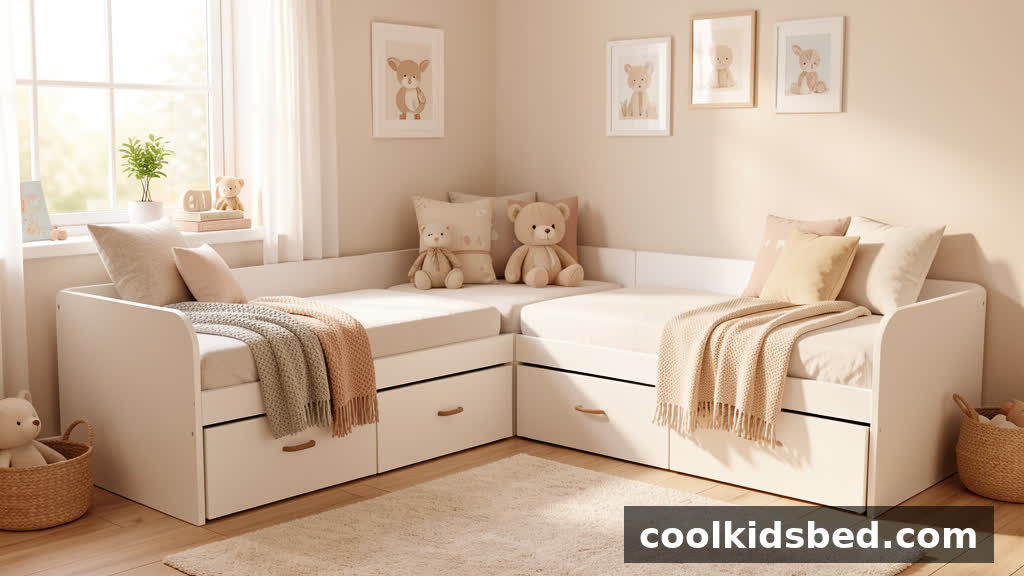
If you’ve ever tried fitting a regular bed into a corner and ended up with awkward dead space, you’re not alone. An l-shaped daybed is basically designed to solve that exact problem. It tucks into a corner and uses every inch of floor space efficiently. For small rooms — and most kids’ rooms are small — that makes a real difference.
An l-shaped daybed pulls double duty: it’s a comfy couch during the day, a place to sleep at night. The L shape means two sides rest against the walls, leaving the rest of the room open for a desk, a play mat, or extra storage. Parents who’ve gone this route usually say the same thing: they should have done it years ago.
What to Look For
Not all l-shaped daybeds are the same. Here’s what actually matters.
Frame Material
Solid wood holds up best — think jumping, climbing, the occasional wrestling match. Metal frames are lighter and cheaper, but check the weight limit and where the welds are. Some beds use a wood-and-metal mix that hits a nice middle ground on both price and durability.
Guardrail Height
If the bed is elevated at all, you want guardrails. CPSC guidelines say at least 5 inches above the mattress surface. That rule applies to daybeds used for sleeping too, not just bunk beds. Don’t skip this one.
Mattress Fit
Most l-shaped daybeds use standard twin or twin XL mattresses on each leg of the L. Stick with standard sizes when you can — custom-shaped mattresses are a pain to replace later. Twins are easy to find anywhere.
Storage
Some l-shaped daybeds have built-in drawers or shelves under the seating section. That’s a huge win in a small room. For example, the Bellemave L Shaped Corner Bed includes three storage drawers and shelves, making it a solid pick for parents who need every bit of organized space they can get. Others leave open space underneath where you can slide bins. Either way works, but if you can get storage built in, take it.
Safety Stuff You Should Check
- Corner guards: The outer corners of an L shape can be sharp. Look for rounded edges or add silicone corner guards yourself.
- Trundle clearance: Planning to add a trundle for sleepovers? Make sure the l-shaped design leaves enough room underneath. Not all of them do.
- Weight limits: Check the rating for each section. Some l-shaped daybeds are built for kids only, others can handle adults sitting on the seating side.
- Check the bolts: Tighten everything during assembly and give it a quick check weekly for the first month. Wood frames settle as they adjust to humidity.
L-Shaped Daybed vs. Loft Bed vs. Bunk Bed
These three bed types get compared a lot. Here’s the short version:
| Type | Best For | Tradeoff |
|---|---|---|
| L-Shaped Daybed | Corner spaces, seating + sleeping in one | Floor footprint is bigger than loft or bunk |
| Loft Bed | Tiny rooms that need desk space underneath | Kids have to climb, ceiling needs to be high enough |
| Bunk Bed | Shared rooms, two kids | Top bunk has weight limits, younger kids need stairs |
An l-shaped daybed is usually the safest option for younger kids since it sits lower. For older kids or teens in a tight space, a loft bed with a desk underneath might work better.
A Few Options Worth Looking At
Wooden L-Shaped Corner Daybed with Storage
Solid pine frame, three storage drawers built into the base. Fits a twin mattress on each arm, so it works for siblings sharing a room or for one kid who wants more lounging space. Natural wood finish blends with most decor. Check price on Amazon.
Metal L-Shaped Daybed with Trundle
Budget-friendly option with a pull-out trundle under the longer section. Powder-coated in white or black. Supports up to 250 pounds per section — enough for most kids and teens.
Upholstered L-Shaped Daybed with Backrest
More of a sofa-by-day, bed-by-night setup. The padded backrest makes it comfortable for reading or movie nights. Available in several fabric colors. Just know that fabric stains — removable washable covers are worth the extra cost.
Setting It Up
- Measure your corner before you order. The L shape needs a 90-degree corner with enough room on both walls.
- Leave at least 24 inches of walking space on the open sides.
- Use furniture anchors if any part of the bed is elevated. Tip-over safety matters even for low beds if kids climb on them.
- Get a mattress protector. Daybeds get used for sitting, jumping, and snacking, not just sleeping — the mattress takes more abuse than you’d think.
Bottom Line
An l-shaped daybed solves a problem that a lot of parents run into: what to do with that awkward corner that regular furniture just does not fit into. It gives you seating, sleeping, and sometimes storage all in one piece. If you’re stuck on how to arrange a small room and the usual bed layout isn’t working, this is worth a serious look.
For more space-saving ideas, check out our guide to full size murphy beds with cushion — another solid option when every square foot counts.