
Buying Guide
Twin Over Twin Bunk Bed with Staircase: The Complete Buying Guide for 2026
Sep
Twin Over Twin Bunk Bed with Staircase: The Complete Buying Guide for 2026
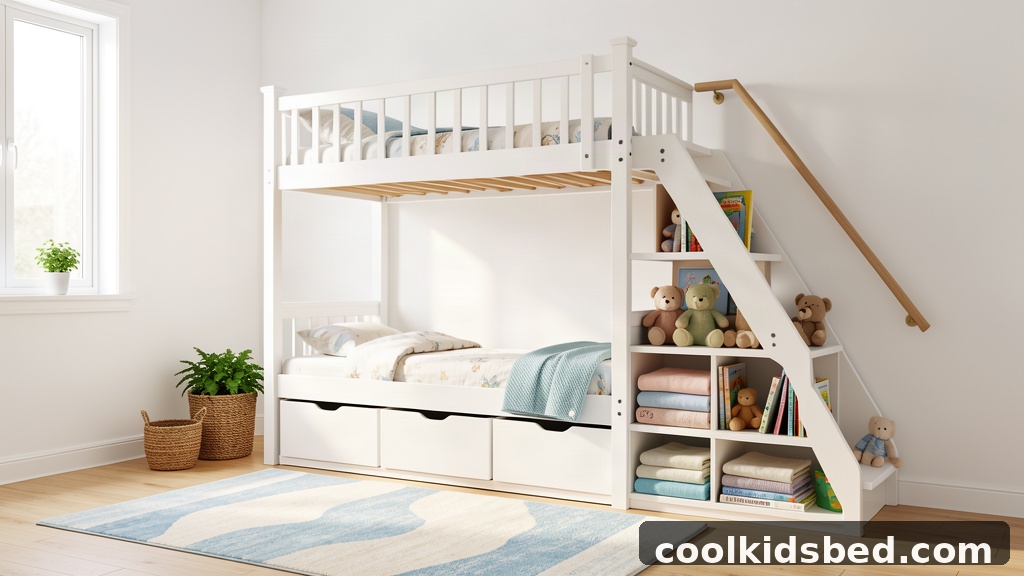
A twin over twin bunk bed with staircase is a stacked two-bed frame that pairs two standard twin mattresses with a graded set of steps instead of a ladder. The staircase typically holds four built-in shelves or drawers, adds a handrail on the open side, and most frames can later be split into two separate twin beds.
Ask any parent who has watched a six-year-old negotiate a vertical ladder in socks at two in the morning, and you will hear the same answer: the stairs are worth the extra floor space. That is why stairway bunks now outsell ladder bunks in the twin-over-twin category, and why these frames have become the default pick for shared bedrooms. Before you order, though, a handful of numbers decide whether the bed fits your room, and a handful of safety details decide whether it suits your kid.
Why a Staircase Changes the Everyday Routine
A ladder is a climbing tool. A staircase is a piece of furniture. The difference shows up in three places.
First, access. Four steps with anti-slip treads and a handrail let a five-year-old climb without a spotter, and they let you change the top bunk sheets with both hands free. Second, depth. A stairway adds roughly 13 to 16 inches to the length of the frame compared with a ladder model, so a bed that measures about 94 inches long becomes closer to 108 inches once you include the bottom step. Third, storage. Nearly every stairway bunk puts the space beneath the steps to work as shelves or drawers, which is why these frames regularly replace a dresser in small bedrooms.
If your room is genuinely tight, a twin size loft bed with stairs is the better comparison, because a loft lifts one mattress high and clears the entire floor underneath. A bunk keeps both mattresses low and centered, which suits younger kids who still roll out of bed.
Measurements That Decide the Purchase
Stairway bunks are longer than they look in product photos. A typical twin over twin with staircase measures about 94.2 inches long, 42.7 inches wide, and 62.2 inches tall, with roughly 34.7 inches of clear space between the upper and lower mattress platforms. Add the bottom step and you are working with close to nine feet of wall.
- Wall run: 100 to 110 inches of clear wall for the frame, plus about 6 inches of breathing room at the open end.
- Ceiling: at least 30 inches between the top mattress surface and the ceiling so the child on top can sit up without bumping their head.
- Door swing and closet doors: check both, because the staircase end of the bed is exactly where a bedroom door tends to land.
Ceiling fans are the most common deal-breaker. A 62-inch frame plus a 6-inch mattress puts the sleeper at about 68 inches, and a fan hanging 12 inches below an 8-foot ceiling leaves almost no margin. Move the fan, or choose a low-profile frame.
Storage Built Into the Stairs
The staircase is the reason most families pick this layout over a plain bunk. A four-step stairway commonly hides four open cubbies or four drawers sized for folded bedding, and the top step often doubles as a shelf. On models like the Merax stairway bunk, the staircase also carries three drawers beneath the lower bed, which adds roughly the capacity of a small two-drawer nightstand without putting another piece of furniture in the room.
Open cubbies suit toddlers who cannot manage drawer slides yet; drawers keep dust off spare quilts and sheets. Measure the openings before you buy storage bins, because the narrowest step on most stairways runs only 11 to 13 inches wide.
Safety Checklist Before You Click Buy
Upper bunks are where injuries happen, so spend your attention on the rails and the ratings rather than the finish color.
- Guardrail height: 14 inches is the current standard on quality stairway bunks, and the top of the mattress should sit at least 5 inches below the top edge of the rail.
- Both sides: guardrails should run the full length of the upper bunk; the stair opening is the only gap allowed.
- Weight limits: budget frames rate the upper bunk at 175 lbs and the lower bed at 275 lbs, while sturdier builds rate each bunk at 330 lbs. Add up what your kids weigh now and leave a 20 percent margin.
- Age: manufacturers and the CPSC recommend the top bunk for children age 6 and up.
- Certification: look for a frame built to ASTM F1427, the bunk bed standard covering guardrails, openings, and structural strength.
- Slats: no more than 3 inches apart, with a center support leg under the lower bed.
Two mattress rules matter as much as the frame itself. Keep the upper mattress at 6 inches thick or less and the lower at 8 inches or less, or the guardrail stops doing its job. A memory foam topper on the top bunk can add 3 inches and quietly defeat the rail, so keep toppers on the bottom bed.
What Stairway Bunks Cost in 2026
Pricing falls into three bands. Entry-level stairway bunks from brands such as Merax and DHP land between $320 and $550, and they usually include the staircase plus two or three drawers. Mid-range frames run $550 to $900 with solid pine construction, higher weight ratings, and finishes that hold up to a decade of use. Premium stairway bunks from Donco, Storkcraft, and Max & Lily start near $900 and top out around $1,600, with GREENGUARD Gold finishes, 400 lb per-bed ratings, and trundle-ready lower bunks.
Two costs surprise first-time buyers. Shipping arrives in two or three boxes that can land on different days, and the frame needs two mattresses, roughly $150 to $400 at mid-quality. A trundle mattress adds another $100 to $200 if you want the extra sleeper. Total outlay for a solid mid-range stairway bunk with mattresses usually lands near $900, which is still less than two separate twin beds plus a dresser.
Models and Brands Worth Comparing
Start with the Merax Stairway Twin Over Twin Wood Bunk Bed, which is the configuration most parents picture: a four-step staircase with four open shelves, three drawers under the lower bunk, a full-length guardrail up top, and the option to split the frame into two standalone twin beds. Its upper bunk is rated for 175 lbs and the lower for 275 lbs, and it is designed around the same 6-inch and 8-inch mattress thickness limits, so the rails keep working as intended.
If you want more headroom on weight capacity, the KOTEK twin over twin bunk bed with stairs and drawers rates both bunks at 330 lbs and the staircase at 200 lbs, and it pairs a 14-inch guardrail with handrails on the steps. Both frames assemble with basic tools, need no box spring, and ship in multiple boxes.
Among the traditional brands, DHP covers the budget end with lightweight wood-and-metal frames, Walker Edison leans industrial with metal stair rails, and Donco and Storkcraft concentrate on solid wood builds for younger kids. If you are weighing different sleeping configurations, our guide to twin over full bunk beds explains when a wider lower mattress is worth the extra footprint, and the bunk bed brand comparison for 2026 lines those weight ratings up side by side. Families who want a third sleeping spot instead of a staircase should read the twin size bunk bed with trundle picks first, since a trundle and a staircase cannot occupy the same end of the frame. And if you are still deciding between climbing styles, the bunk bed with ladder guide covers the trade-offs.
Assembly Tips That Save an Afternoon
Plan on two adults and three to four hours of work. Stairway bunks have more parts than ladder bunks, because every step carries a tread, a riser, and a support cleat.
- Open every box before you start and sort hardware by step number. Missing parts are the most common complaint in reviews, and you want to find out on day one rather than hour three.
- Build the staircase first, attach it to the lower bed rail, then raise the upper bunk. Working in that order keeps the frame square.
- Tighten every bolt finger-tight first, check both diagonals with a tape measure, then torque everything down. A frame that is out of square by half an inch will wobble forever.
- Add a furniture anchor strap if your child is a climber. It is a $10 part and ten minutes of work.
Retighten the bolts after the first month and again at six months. Stairway bunks carry more lateral load than ladder models, and the staircase bolts take most of it.
Final Checklist
- Confirm 100 to 110 inches of clear wall and at least 30 inches of ceiling clearance above the top mattress.
- Verify full-length guardrails on both sides, a 5-inch mattress-to-rail margin, and ASTM F1427 certification.
- Match weight ratings (175 lbs upper and 275 lbs lower on budget frames, 330 lbs on sturdier builds) to your kids with a 20 percent margin, and keep the top bunk for age 6 and up.
- Cap mattress thickness at 6 inches above and 8 inches below.
- Budget $320 to $1,600 for the frame plus $150 to $400 for mattresses, and keep the model number for replacement parts.
A stairway bunk is one of the few kids furniture purchases that gets easier every year. The stairs are safer while your kids are small, the storage keeps working through middle school, and most frames split into two beds when they want their own space. Measure twice, check the rails, and this one lasts until they leave for college.